





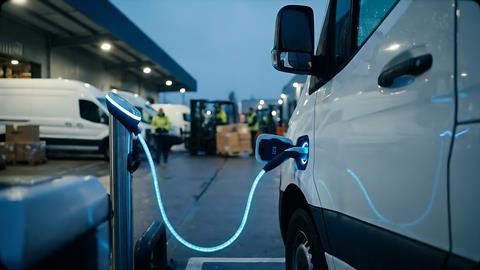

More fleets are turning to their suppliers for support with electrifying their van operations, according to new research.
The 2026 Arval Mobility Observatory Barometer shows 88% are making use of expertise from leasing companies and other third parties to help with the transition – up by 14% since last year.
John Peters, UK head of Arval Mobility Observatory, said: “Van fleets are finding electrification a very real challenge and clearly, an increasing number of operators are turning to suppliers for advice and assistance.
“From our experience, the ease with which fleets transition varies widely. A business that carries light loads, delivers locally and has easy access to charging is likely to encounter few problems.
“One that relies on its vans to cover hundreds of miles every day, with a full payload, and uses mainly highway charging, will face more operational hurdles.
“External expertise can be invaluable in tackling these challenges and, like other suppliers, we have worked with many fleets on successful electrification projects, gathering a wealth of best practice ideas and transition processes.
“These can be applied whether you are dipping your toe into the water with your first few electric vans or want to completely electrify.”
The Arval Mobility Observatory Barometer also asked van fleets about the factors driving their decision to go electric in 2026.
Peters said: “Overwhelmingly, their concerns are practical. The top reason, as last year, is to drive in Low Emissions Zones. Many operators in cities are concerned about future clean air restrictions.
“Electric vans are likely to offer unrestricted access, whatever regulations are introduced.”
“Second placed at 29% - and a big jump from 2025’s 20% - is to reduce fuel expenses.
“This suggests operators are using low-cost methods of charging, such as depot and home charging, to cut their day-to-day expenditure on fuel.
“Certainly, compared to diesel at the pumps, these charging options are decidedly cheap and represent a key operational benefit of electric vans.”
Other large increases can be seen for improving company image – up from 16% to 25% - and to be compliant with corporate social responsibility policies – which has risen from 16% to 24%.
Peters said: “Especially among larger fleets, environmental policies are a driver of electric van adoption, and this is a trend that is probably going to increase in the future.”
Survey results:
Why are you already, or are considering, adopting electric vans on your fleet?
To drive in low emissions: zones 32%
To reduce fuel expenses: 29%
To improve company image: 25%
Because of tax benefits: 24%
To be compliant with CSR policies: 24%
To fulfil employee requests: 23%
Lower environmental impact: 23%