







Returning to DHL at a pivotal moment, new UK&I CEO Martin Willmor lays out a focused five-point strategy - spanning growth sectors, transport reform, major startups and property investment - to steer the business confidently through a shifting economy
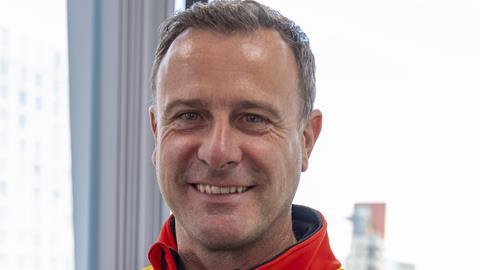
When Martin Willmor returned to DHL Supply Chain after three years building its DigiHaul freight platform from scratch, he didn’t just settle back behind a desk. He hit the road instead.
“I’ve spent most of the last four weeks just getting out and about,” he says. “Nineteen site visits up and down the country, meeting people at the front line, listening, getting a feel for how they’re doing. And honestly, we were super chuffed with the morale, given the economic backdrop.”
It’s an assessment that neatly sums up Willmor’s opening weeks in the job - grounded, practical and rooted in the people who keep the operation moving.
Willmor officially succeeded former UK&I chief executive Saul Resnick on 1 October, returning to the company he first joined back in 2002.
“Saul did a really good job, but the opportunity to return to Australia with his family was the right one,” he says. “He tackled the tough challenges and left us with a strong platform.”
Willmor is someone group chief executive Hendrik Venter has every confidence can now deliver the next chapter of growth. His mandate is to accelerate, and he’s quicky developed a plan based on five priorities – the things he says will “move the needle”.
The first of these he simply describes as growth. DHL benefits from a diverse portfolio. So while food and drink volumes may be slipping, e-commerce, e-fulfilment, new energy (wind and solar), transport, and inbound manufacturing are DHL’s strategic bets.
“If one softens, another strengthens,” he explains. “We adapt. That’s the resilience of our model.”
E-commerce growth isn’t as explosive as it was four years ago, but it remains strong. Life sciences is booming - “weight-loss jabs are flying,” Willmor laughs — and DHL’s acquisition of CryoPDP has positioned the company well for the pharma temperature-controlled space.
“We’ve got good visibility on what markets will grow in the next three to five years,” he says. “Yes, you take risk, but a calculated one.”
The second priority, he insists, is not just driving growth, but being “fit for growth”. He’s talking here about the unglamorous but essential work: infrastructure, process automation, payroll, expenses, reconciliations, back-office redesign.
“It’s great to win business, but we’ve got to deliver on the promise. Being fit for growth is about having the backbone right.”
Third on his priority list are startups. DHL has over 100 new projects starting in 2026, and “seven or eight are transformational”.
“We’re talking big new sites, automated sites, brand-new customers, brand-new systems, brand-new people. Getting startups right is absolutely critical.”
And if there’s one area Willmor is especially passionate about, it’s transport, which is unsurprising given DigiHaul’s DNA. “We still plan a lot of our transport by customer. That has to change,” he admits.
But there’s a solution: connected regional control towers, capable of sharing assets across sectors where rules allow. “You can’t mix toxic with food, of course, but there are a lot of opportunities. Customers are more receptive now. If you take just 10% of unnecessary fleet movement off the road, that’s a huge carbon saving.”
Last on Willmor’s priority list is property. DHL operates 400 sites in the UK and “a company can’t grow without space”.
DHL’s estate is categorised for efficiency, carbon neutrality, and long-term capacity — including new multi-unit developments like Corby, where interest for long-term strategic deals has been “really strong”.
Volume dip
So with the growth plan in place, how’s business for DHL right now?
Volumes are down, he admits, but not disastrously. “A couple of percent,” he says of DHL’s food and drink activity. “Not double digits, nothing material.” October dipped, but November has recovered sharply, tracking the patterns DHL knows well.
“It follows paydays,” he says. “You can read consumer confidence just by watching how the drinks and convenience categories behave.”
But inside that data there’s something more interesting: a split between frugality and small luxuries. “Basket sizes are smaller, but people are switching between own-brand and premium,” he says. “Our view is people are eating out less but still treating themselves at home.”
For a fleet-heavy business, those patterns drive everything from warehouse labour to trunking schedules. And as Willmor notes, the fourth quarter is where many of DHL’s retail customers “make their money”.
“That’s why peak execution matters. We’ve got robust plans, fleet in the right places, and a huge operational focus to make sure we deliver. Our customers rely on that.”
The dominant mood of the market, Willmor says, is uncertainty – “and in uncertainty, customers look for reliability”.
He adds that the last year has driven more strategic conversations than he’s ever seen in UK logistics.
“Ten years ago, you’d do a two-year deal, maybe three. Now we’re talking five- or ten-year partnerships,” he says. “Customers want stability, investment, property commitments, and assurance.”
Corby is the example he points to — a site where long-term demand has soared.
The point leads us into his thoughts on the GXO/Wincanton situation and the CMA’s ruling on grocery logistics. How might the grocery divestment play out?
“One option is outsourcing to us,” he smiles. “Another is insourcing. Some operations are already running well, so transitions might be simpler. Time will tell. It’ll be a mix. And there’s no burning platform — they can shift volume across their networks very effectively.”
Expect movement sometime in the first half of 2026, he predicts.
Peak season squeeze
The conversation turns to Black Friday at the end of the month, but it’s “not what it was,” he says bluntly. “You don’t see the 30–50% uplifts anymore. Retailers realised the surge just shifted volume around and cost them money. We used to scale up by 600–700 people for just three weeks. Now it’s smoother. More sensible.”
The Autumn Budget is another focal point. With the sector already contending with National Insurance and minimum wage increases, DHL is scrutinising the Chancellor’s next move.
“We’re expecting more bad news; higher taxes were pretty clearly signalled,” Willmor says. “So for us it’s tight cost control. Understanding our cost base inside out and making sure we’re investing in the right places.”
But surprisingly, as talk turns to the hype surrounding AI, Willmor plays down its significance. While others in the sector either trumpet its benefits or warn of its disruptive power, he’s more pragmatic: “I don’t think it’s the wild revolution some said a year ago,” he says. “It’ll help. It’ll evolve. But it won’t replace people.”
DHL is already trialling AI for predicting arrivals and departures, processing PODs, and reducing repetitive admin in transport and supporting planning. But the fundamentals of logistics will remain the same.
“You still need to get product from A to B,” Willmor points out. “Warehouses, properties, trucks, drivers… that doesn’t go away. AI supports people. The trust and quality of a person still matter.”
Range anxiety
Returning to the theme of decarbonisation, Willmor is not entirely dismissive of electric trucks but won’t pretend they’re ready for widespread adoption.
“For 26 pallets of Colgate toothpaste, the range just isn’t there,” he jokes.
The barriers are well-known: payload, range, charging infrastructure and cost: “Express can electrify small vans, that’s easy. But HGVs? We’re a couple of years away. You see pilots, but not yet industrial, reliable, nationwide use.”
Instead, DHL’s focus is on efficiency first. That means shared fleet, better planning and control towers.
In terms of fuel, Willmor favours HVO and LNG over electric for long-haul routes, and he draws on his DigiHaul experience to emphasise the advantages of data-driven routing.
But while Resnick told MT back in March that the government may have to push back the deadline on the phase-out of diesel trucks, Willmor believes that would be unhelpful.
“I’m not sure pushing back or bringing forward diesel phase-outs is the point,” he says. “For me, government should raise awareness of carbon impact. A bit like the fat or sugar labels on food. If something’s been air-freighted and shows up red on a carbon score, the younger generation will change their buying habits.”
He remains sceptical about claims that Chinese truck manufacturers will increasingly influence the UK market. While DHL has observed impressive quality from new Chinese car brands entering the UK, the situation is different for HGVs.
“We’ve evaluated some models, but we’re not yet convinced about their reliability and overall quality. The technology in cars is excellent, but when it comes to heavy trucks, it’s a different story,” he says.
Driver investment
Asked about the RHA’s renewed warnings of a worsening driver shortage, Willmor says DHL is coping well and insists the company remains in a strong position.
“When the driver crisis hit during Brexit, it was brutal. But we invested in our driving community — the fleet kit, the facilities, the engagement. Some of the cabs now have fridges, everything. And it’s worked. Turnover is much lower.”
DHL still uses agency labour, but in a more controlled and strategic way: “We work with fewer agencies, but deeper partnerships,” he says. “Our spend is more important to them, and we get quality.”
We turn to another common issue for big logistics firms, and one that rivals like Culina have had to address, where siloed divisions risk operating like “private islands”. Has DHL faced a similar problem?
“Honestly, no,” Willmor insists. “But the risk is always there in a business our size. That’s why I’m passionate about us being one regional team. UK and Ireland together. We meet as a leadership group every month. Transport Tomorrow is all about joining systems up. Taking miles off the road. Seeing assets regionally, not in pockets.”
Ultimately, there’s a refreshing simplicity, and clarity, to how Willmor communicates. No theatrics or grandiose statements. Just structure, detail and a striking amount of operational grounding.
And rather than distance himself from the front line, he seems genuinely energised by spending time on sites with people doing the job: “That’s where the energy is. Where the business actually happens.”
In the UK and Ireland, growing the business will be about strategic bets, long-term contracts, major property investments, smarter transport, data-driven operations, and a strong people culture. He’ll also need a fair amount of patience with the pace of alternative fuels.
But there’s no sense of urgency or uncertainty from Willmor. Instead, he exudes a calm, steady confidence, grounded in a clear plan for the future. His vision is built on resilience, and long-term growth. And in a market defined by uncertainty, it’s this blend of operational precision, patient investment, and steady leadership that will steer DHL through the challenges ahead.
“We’ve got the right plan,” he concludes, “and if we deliver on it, we’ll be in a very, very strong place.”