







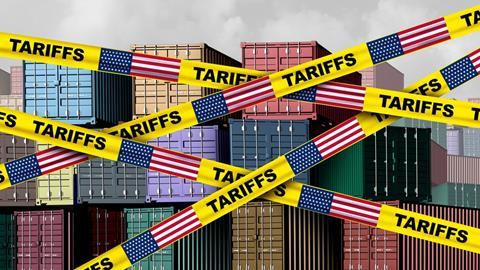

Over three quarters of logistics businesses expect to be disproportionately disrupted by changes to global tariffs, according to a survey published this week by HSBC UK.
The survey of 92 logistics firms was part of a wider study looking at the impact of international trade disruption.
The findings reveal that 75% of logistics businesses predict they are likely to be impacted by changes to tariffs and policies.
Over a quarter (28%) have now delayed investment decisions, while one in ten (10%) have decided to bring forward investment decisions to act quickly in the face of tariffs and global upheaval.
The news comes as the US and UK agree a new trade deal that will reduce tariffs on British-made cars and aerospace components as well as UK steel and aluminium exports.
Logistics firms have also responded to likely supply chain disruption by taking a number of protective measures.
These including reconfiguring their supply chains to match global demand and changing trade agreements (21%); scaling back services and products (12%); sharing services with other businesses to spread risk (12%); and even stockpiling products (10%) or considering an exit (10%).
A further 14% stated their future plans have been impacted positively by diversifying product services and offerings or expanding into new markets.
Rob Brand, HSBC UK head of business services for freight and logistics, said: “The recent UK-US trade deal brings a little more certainty to the trading environment across the Atlantic.
“However, it would be wrong to assume this is a panacea for the global upheaval of trading arrangements. With three quarters of all firms working in logistics feeling the impact of these policy changes, it will take time for things to settle.
“That said, the logistics sector is used to change and is incredibly resilient. Indeed, for many this will be an opportunity to engage with their clients and broaden their relationships, supporting clients to navigate this new, complex landscape.
“It is no coincidence to see firms diversifying their service offerings, tweaking their supply chains and even pivoting into new markets. Freight and haulage businesses have an opportunity to provide higher margin advisory services due to the additional complexity.
“Logistics is gaining prominence in board room discussions for both domestic and international businesses. The sector has a strategic role to play in shaping these debates as a partner.”