
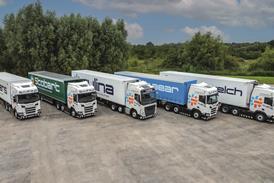







A freight decarbonisation initiative in South West England has achieved a significant milestone, with 65 loads successfully matched, generating over £68,000 in revenue for local hauliers and preventing 7,915 kg of CO2 emissions through reduced empty running, according to new data from TEG.
The collaborative project, led by sub-national transport bodies Peninsula Transport and Western Gateway with TEG’s Haulage Exchange platform, has demonstrated measurable environmental and economic benefits since its expansion.
The project addresses the problem of empty running, which accounts for approximately 30% of all haulage vehicle miles according to DfT data.
By providing participating hauliers with access to load-matching technology through TEG’s Haulage Exchange, the initiative enables businesses to find profitable return loads, improving vehicle utilisation whilst reducing environmental impact.
Vehicle types participating in the programme range from 7.5-tonne trucks to 13.6-metre articulated lorries, with 7.5-tonne vehicles showing particularly strong engagement across multiple regions.
The initiative now includes 11 participating haulage companies across the region, with loads posted by companies for subcontracting reaching 1,906.
Key achievements from the updated pilot programme include 7,915 kg of CO2 emissions prevented through 9,195 miles of optimised return journeys and a total revenue of over £68,000 generated for participating local hauliers
In addition 65 loads have been successfully allocated to vehicles that would otherwise have travelled empty, whilst in terms of regional coverage load matching has increased with the highest activity from Greater London (10 loads), the South East (15 loads), and the South West (23 loads)
The data reveals strong engagement from participating companies, with businesses joining throughout 2024 and demonstrating sustained activity.
Bristol-based operators feature prominently amongst the most active participants, highlighting the project’s success in building a regional network of collaborative hauliers.
The most active freight lanes include routes from the East Midlands to Exeter (129 loads), West Midlands to Exeter (128 loads), and North East to Truro (115 loads), which TEG said demonstrates how the platform is successfully connecting return journey opportunities across major UK freight corridors.
Lyall Cresswell, TEG founder and chief executive, said: “These results demonstrate the real-world impact that smart logistics technology can have on both environmental and business outcomes.
“By giving local hauliers access to our platform, we’re not just reducing empty miles – we’re creating tangible economic value while supporting the region’s sustainability goals.
“The fact that we’ve generated over £68,000 for local businesses whilst preventing nearly 8 tonnes of CO2 emissions shows how collaboration and technology can drive meaningful change.”
Cllr John Stephens of Peninsula Transport, said: “The pilot project with TEG is an example of the South West Freight Strategy in action.
“By cutting carbon, boosting the regional economy, and making better use of our existing freight capacity we’re pleased to be supporting cleaner, more efficient and better connected transport across the region.”
Cllr Chris Willmore of the Western Gateway STB, said: “We are pleased to support the important initiative as part of our work to decarbonise freight with STB funding and guidance.
“Freight is so important to our economy, but is often overlooked. This pilot reduces the number of miles HGVs travel empty, which without the initiative often contribute to climate change and cost businesses money.
“By working collaboratively with our neighbouring STB, Peninsula Transport, we can maximise our impact on the freight industry and see our South West Freight Strategy come to life”.
Peninsula Transport brings together the five transport authorities in the peninsula; Cornwall, Devon, Plymouth, Somerset and Torbay to improve strategic transport and transform the economic potential of the region.
The Western Gateway works to improve transport and connectivity across nine local authorities from Gloucestershire to Bournemouth, including Bristol, Gloucester, Cheltenham, Salisbury and Bath, as well as the towns of Weymouth, Stroud, Tewksbury, Dorchester and Poole.