




Switching more road freight to rail could significantly cut road deaths and injuries and reduce congestion and carbon emissions, according to a new report commissioned by the All-Party Parliamentary Group for Transport Safety.
The study, produced by land transport safety consultancy Transafe, compared freight movements by road and rail using a specially developed “Rail Adapted” Fatalities and Weighted Injuries (FWI) model.
It found that road freight recorded a safety risk figure at least 78 times higher than rail freight, although the authors acknowledged that limitations in available data and differences between road and rail safety reporting systems meant the comparison required a number of assumptions.
The report said that moving more freight by rail could help reduce the number of HGV movements on the strategic road network, where lorries currently account for around 309 million miles of travel annually.
In 2024, UK domestic freight moved 206 billion tonne-kilometres, with road accounting for 168 billion tonne-kilometres, compared with 17 billion by rail and 21 billion by water.
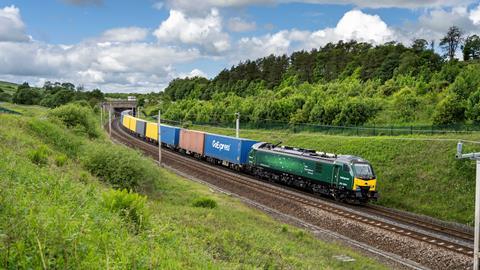
The report highlighted that a single intermodal freight train can remove up to 75 HGV movements from the road, while construction freight trains can replace up to 129 lorry journeys. It also said rail freight produces around 76% fewer CO2 emissions per tonne than road freight.
The findings come as logistics operators increasingly invest in expanding rail freight capacity as part of efforts to cut emissions and improve supply chain resilience.
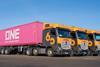
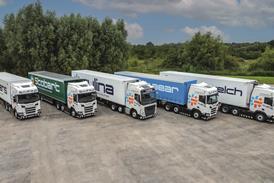
Operators including Eddie Stobart, Maritime and Malcolm Logistics operate rail freight services alongside road fleets, co-ordinating trunk rail movements and final-mile delivery by HGV.
Meanwhile port operators including Associated British Ports and DP World have developed rail links at their UK ports to encourage logistics operators to transfer more freight to rail.
The report noted that government has set a target of increasing rail freight tonne-kilometres by 75% by 2050, to help meet net zero targets and reduce pressure on the road network.
It added that rail freight already accounts for the equivalent of more than 800 million HGV miles, but argued that further modal shift would be required to maximise the safety and environmental benefits.
The report’s authors concluded that increasing rail freight capacity would improve safety, lower carbon emissions and reduce congestion and called for improved data collection to allow more accurate comparisons between road and rail safety performance to better support future investment decisions and planning policies.




![Rail Image[81263]](https://d2cohhpa0jt4tw.cloudfront.net/Pictures/100x67/3/0/6/26306_railimage81263_892974.jpg)