
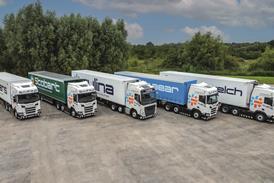










The government’s updated National Planning Policy Framework (NPPF) includes a dedicated freight and logistics policy for the first time ever, recognising the importance of the sector to the UK economy.
The updated framework, published this week, directly addresses the sector by introducing Policy E3, the UK’s first Freight and Logistics policy.
Its inclusion follows concerted lobbying by the industry for greater recognition of the important role the logistics sector plays in keeping supply chains moving and driving economic growth.
Policy E3 establishes explicit baseline checks that local authorities must apply when evaluating freight and logistics planning applications:
These include ensuring appropriate proximity to primary transport networks and corridors and instructs planners to weigh potential environmental impacts, noise, and disruptions to local residents rather than applying blanket refusals.
It also mandates sufficient, secure overnight lorry parking and driver facility improvements and requires dedicated space for alternative clean fuels and electric vehicle (EV) fleet charging.
Policy E3 also works closely with Policy E2 which mandates that substantial weight must be given to proposals that support improvements in freight and logistics.
While Policy TR1 seeks to minimise overall movement and promote sustainability, Policy E3 provides the practical reality check for heavy goods.
It ensures that as local authorities design sustainable transport networks under TR1, they actively safeguard high-capacity freight pathways and logistics hubs required to keep supply chains moving.
The recognition of the importance of freight and logistics in the updated NPPF has been welcomed by the industry.
Richard Smith, RHA MD, said: “Planning policy matters to our industry because it determines where logistics facilities can be developed, how freight movements are considered alongside housing and commercial growth, and whether suitable land is protected for essential infrastructure such as lorry parking.
“We have moved from freight and logistics receiving virtually no recognition in one of the country’s most important planning documents, to increasing visibility in successive drafts and now to a dedicated policy.
Ben Fletcher, Logistics UK chief executive, said the inclusion of a dedicated freight and logistics policy represents a significant milestone.
“The draft framework is a positive move towards a planning system that better supports the needs of the UK’s logistics sector and the businesses, communities and supply chains that depend upon it,” he said.
The UK Warehousing Association also welcomed the new policy. Joshua Holland, UKWA policy and public affairs assistant, said: “We are pleased that the revised NPPF states that ‘substantial weight’ is given to freight and logistics developments and that provision is included for allocating sites to meet existing and anticipated needs.
“Any changes to the NPPF are especially relevant to the warehousing sector, as we often hear from members how difficult it is to gain planning permission when seeking to build new warehouses.
“As a sector, warehousing is far too often overlooked despite the sizeable contribution we make to the UK economy. Our £28.5bn sector is larger than the hotel industry and drinks manufacturing.
“It is therefore a positive step forward that logistics is recognised and appreciated in this revised NPPF, especially given that it was not always the case that logistics was included in previous NPPFs.”