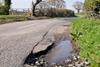








A new traffic light rating system, published by the government this week, which allows drivers to check the performance of local highway authorities on tackling potholes, has been welcomed by the logistics industry.
The new ratings - the first of their kind - grade 154 local highway authorities (LHAs) as red, amber or green based on current road condition and how effectively they are spending the government’s £7.3bn of funding to fix potholes and invest in long-term measures to maintain roads.
The interactive map shows every LHA’s rating, to highlight best practice and drive improved performance from councils and reveals.
The government said the £7.3bn is a record, multi-year investment which aims to help LHAs move away from expensive, short-term repairs and instead invest in long-term preventative measures.
The red, amber, green ratings are based on three key areas - the condition of local roads; how much LHAs are spending on road repairs; and whether they are following best practice in maintaining highways.
The rating system aims to shine a light on where local authorities are excelling and where more needs to be done to deliver change people see in their communities.
Those that scored green, such as Leeds, Sandwell, Manchester, Wiltshire and Essex, were able to demonstrate they are following best practice, such as investing in more long-term preventative measures rather than just patching up potholes, while also maintaining good road conditions and investing significantly into improving local roads.
Amber-ranked LHAs, which represent the largest cohort on the map, showed some of these qualities with room for improvement in individual areas, while those rated red are not yet meeting the expected standards in one or several areas measured by the ratings - such as the current state of the roads, their plans for preventing potholes or investment into maintaining their local roads more widely.
To boost standards, LHAs currently rated red, such as Derbyshire, Leicestershire, West Northamptonshire, Bedford and Suffolk, will receive dedicated support to bring them in line with best practices, backed by £300,000 worth of expert planning and capability assistance.
The support programme will include peer reviews where sector experts will help improve processes and provide practical advice.
As an incentive to better roads, access to full future funding allocations will be linked to performance, ensuring councils are encouraged to get on with the job and use taxpayer money efficiently to repair and maintain their roads before potholes form.
To further ensure transparency from LHAs, 25% of local highway authorities’ £500m funding uplift this financial year was withheld until they published transparency reports and set out how they comply with best practice.
The withheld £125m in funding was unlocked at the end of last year by councils which successfully submitted their reports.
In further support for local authorities, the government will extend the Live Labs 2 programme for another year, providing up to £300,000 to help councils access and adopt more innovative approaches to maintenance, including uptake of longer-lasting, low-carbon materials for repairing roads faster, more efficiently and far less often.
The strategy has been welcomed by Logistics UK. Jonathan Walker, head of infrastructure and planning policy, said: “The Road Maintenance Ratings announced today are a positive step toward greater transparency and accountability in local highway authorities ensuring roads are in good condition.
“Potholes cost the UK economy over £14.4bn a year, largely because of longer journey times as drivers attempt to limit damage to their vehicles, and a well-maintained road network is critical for the UK’s logistics sector and the nation’s economic prosperity.
“However, for logistics operators, the ultimate goal is not simply more pothole repairs, but a decisive shift toward planned, preventative maintenance and investment.
“Long‑term programmes that resurface and renew roads before they fail are far more cost effective than reactive, short-term maintenance activity that does little to address the underlying deterioration that disrupts supply chains, increases vehicle operating costs, and undermines road safety.”
Simon Williams, RAC head of policy,said the ratings were a positive move. He added: “While there are examples of good road maintenance practice taking place, this isn’t consistent across the country and means drivers have, for too long, been left with substandard roads.
“We hope this initiative, plus the promise of longer-term funding for councils to allow them to plan and carry out much-needed preventative maintenance, means we’re finally on the way to having smoother, better roads.”
Kerry Winstanley, Local Council Roads Innovation Group (LCRIG) MD commented: “The release of the national ratings provides a clear opportunity to target support and strengthen the local road network where it is most needed.
“For many years, highways authorities have worked hard to maintain roads despite declining budgets and resources.
“The ratings, released alongside record multi-year investment, will enable authorities to benefit from additional support and increase investment in preventative maintenance, while continuing collaborative work supported by LCRIG, including sharing best practices, adopting innovative solutions, and working towards a nationally green-rated road network.”