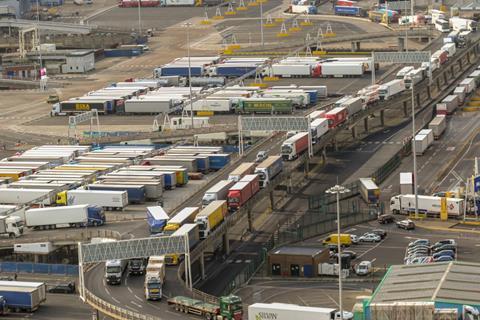






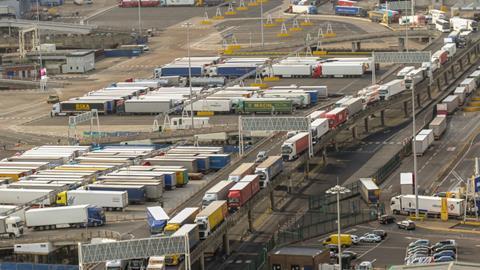

Brexit rules on fresh food movements to the EU will be scrapped in a move Logistics UK said could boost the country’s economy by £5.1bn.
When the rules come into force next year, exporters of meat will no longer require veterinary certificates to prove they meet EU standards.
Documentation for plants or wood packaging material will no longer be required and companies selling to Northern Ireland will not need health labels.
The sanitary and phytosanitary (SPS) checks were introduced as a result of the UK’s deal with the EU to prove exported goods meet EU standards, and then later introduced by the UK on imports from the EU.
Not all of the details of the SPS deal have been finalised, but the Department for Environment, Food and Rural Affairs has published guidance to help businesses prepare for the changes.
Biosecurity minister, Sue Hayman, said: “An important component of the negotiations and one of the reasons why we are looking to agree a sanitary and phytosanitary agreement, particularly on agri-foods, is making it easier, cheaper and quicker for British businesses to trade with the EU.
“In the business meeting that I had in Northern Ireland last week, there was a very positive response from businesses regarding the potential opportunities that will arise from this.”
Ben Fletcher, Logistics UK’s CE, said: “Our members have invested significant amounts of time and money to smooth the movement of fresh food across the UK’s borders, but trade friction has persisted as a result of the checks introduced after our country’s departure from the EU and so we welcome the negotiation of this agreement by Her Majesty’s government.
“Any border delays hinder our industry’s ability to keep the UK’s businesses trading with European customers and so today’s announcement is a common sense solution that acknowledges the challenges that we have faced since Brexit.”
Fletcher said the announcement would increase confidence over the removal of significant hurdles of cost and delays that have restricted the industry’s ability to support fresh food producers to sell to European customers, support UK jobs and help drive growth nationwide: “We will now work with the government to ensure that the new regime can be implemented as seamlessly as possible by mid-2027,” he added.