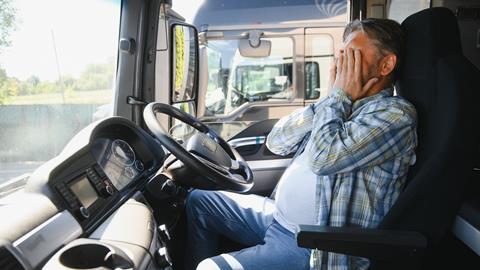
Fleet transport insurance company McCarron Coates is urging employers to renew their focus on driver fatigue to cut crashes and lower premiums.
Between 10% and 20% of all collisions are estimated to be caused by driver fatigue, according to road safety charity Brake. This is due to various factors, including rising levels of stress and a sharp increase in sleep apnoea which can lead to daytime drowsiness.
The Leeds-based insurance broker says fleets must tackle fatigue proactively by monitoring drivers’ health, lifestyles and routes.
This includes awareness of what medications a driver is taking, encouraging drivers to flag up any lack of sleep and observing the individual when in the office or depot for signs of fatigue.
An employer could be prosecuted if they do not take reasonable steps to stay on top of employee sleep patterns and overall health.
A mock trial, sponsored by McCarron Coates in January 2025 and based on an actual case, involved a driver who collided with a cyclist whilst suffering from both lack of sleep and stress.
The employer was prosecuted for having allowed the driver to take to the wheel, when they knew he had had insufficient sleep. The driver was also sentenced.
Having access to vehicle diagnostics and making use of telematic tools and their data can flag indications that a driver is suffering from fatigue before a crash occurs, through late braking and speeding patterns.
McCarron Coates director Ian McCarron said: “We have seen major advantages when customers have installed forward-facing cameras in the cab.
“These can detect signs of distraction and potential fatigue by monitoring lack of concentration and non-observation of the road. They could also highlight physical signs that a driver is about to fall asleep at the wheel and issue audible alerts.
“Cameras can be great allies when it comes to keeping claims down and keeping drivers, and the public, safe from fatigue.”
Implementing effective measures to curb driver fatigue can also lower employers premiums, which are based on claims history.
Drivers involved in crashes that are caused through tiredness tend to generate bigger claims as the resulting damage is usually more substantial - with around 50% resulting in death or serious injury.
By focusing on driver welfare as well as making use of telematic tools and their data, an employer should be able to reduce their claims and receive lower premiums.