








![Mercedes-Benz_eActros_600_(1)[1]](https://d2cohhpa0jt4tw.cloudfront.net/Pictures/274x183/8/1/8/17818_mercedesbenz_eactros_600_11_556244.jpg)





The electric truck conversation has changed significantly over the last few months.

Diesel will remain part of the industry for years yet. What’s changed is that fleets now have far more support to start the move into electric.
The Government’s £1 billion support package for zero-emission trucks, vans and charging infrastructure is a major moment for the industry. For the first time, many operators are looking at electric trucks with meaningful support available not only for the vehicles themselves, but also for the charging infrastructure behind them.
At the same time, fleets are under growing pressure from customers to reduce supply chain emissions, while fuel price volatility, energy security concerns and tightening emissions policy continue pushing transport operators to think differently about long-term fleet planning.
The result is that more operators are now starting to assess where electric fits realistically within their business.
At Renault Trucks, we’ve been focused on electromobility for more than a decade. We were the first manufacturer to put series-production electric trucks into operation, and today our electric vehicles have covered more than 111 million kilometres in customer service across the UK and Europe. That experience has shown that no two fleet transitions are the same.
Every operation has different routes, depot layouts, vehicle access requirements and operational pressures. What works for one fleet may not be the right fit for another, which is why understanding the operation properly is always the starting point. That’s why analysis matters and is a great starting point. Routes, dwell times, duty cycles and available site power all need to be properly understood before decisions are made. Using simulation and operational modelling tools, we can assess how electric vehicles are likely to perform within a fleet and help operators identify the most practical approach for their operation.
In many cases, that process quickly identifies where electric can already work effectively today, and where it may take longer to develop commercially or operationally.
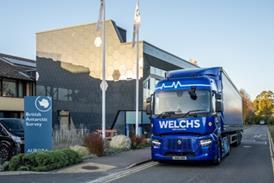
That’s something we’ve explored throughout Renault Trucks’ Zeroing In video series, which drives clarity around the electric transition, speaking directly with operators already running electric vehicles in daily fleet operation, including Kuehne+Nagel, Welch’s Transport and UCLS.

What’s becoming increasingly clear from those conversations is that fleets are no longer asking whether electric trucks can work.
The conversation is becoming much more practical, around where do they fit best, which routes are most suitable and how quickly can operators start building experience inside their own operation?
And increasingly, the operators making the strongest progress are the ones already starting to answer those questions.
To understand where electric trucks could fit into your operation - and how the grants could support the transition - speak to one of Renault Trucks’ Energy Transition Specialists today