







Gas prices soared to four-year highs after Iran attacked a gas field in Qatar, damaging facilities that produce 17% of QatarEnergy’s liquefied natural gas (LNG) export capacity.
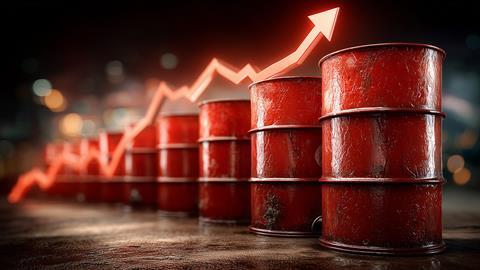
The state-owned company said it would take between three and five years to repair the damage, resulting in a 10% increase in Brent crude oil to $119 a barrel and European gas prices soaring.
Tobias Federico, chief analyst at energy intelligence provider Montel Analytics, said it was “likely” wholesale gas prices in the UK could double over the next three months.
“Europe is approaching the time of year where it seeks to refill gas storage ahead of the winter,” he explained.
“In parallel, it seems likely there will be further attacks in the gulf region. It’s likely that wholesale gas prices in Europe could roughly double to 120€/MWh with a risk that there will be competition for LNG cargoes between Asia and Europe in the coming months.”
Fedrico added: “The question now is not if the 17% of the Qatari exports can be compensated for or not.
“The US can easily compensate for that lost supply in the next few years. It’s more a question of what further damage will happen in the future as long as the war goes on. I assume that the market is pricing in the potential for worse damage than we’ve seen now.”
Sapna Amlani, supply chains industry practice lead at Moody’s Analytics, said attacks on energy infrastructure did not automatically translate into immediate or prolonged shortages: “Supply chains rarely fail overnight,” she said.
“What typically happens is more gradual: higher energy, transport and insurance costs, less predictability, and increased operational complexity for companies.
“Energy is the main channel through which geopolitical shocks feed into supply chains. Even when physical supply isn’t cut, uncertainty alone can drive volatility, which then spreads into freight rates, production costs and corporate margins.
“In regions like the UK and Europe, limited gas storage and reliance on global markets can amplify these effects.
“The more likely outcome is not years of outright shortages, but a period of sustained volatility where energy becomes a structural driver of higher costs and risk.”
The industry has urged the government to reduce fuel duty immediately and protect essential services to the UK economy.