







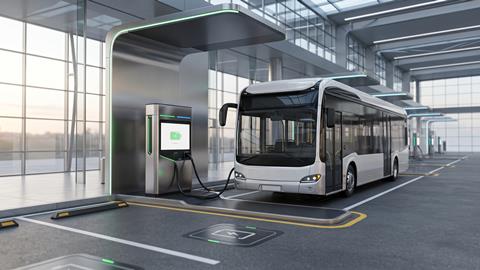

Bus and eHGV fleet operators that have installed charging points at their sites have a strong incentive to share them with other eHGV operators, because electricity connections are charged by capacity rather than energy supplied, it emerged at Logistics UK’s annual meeting on Delivering Decarbonisation.
Mike Nakrani, MD at VEV, told the meeting that electrification for bus operators “is now a cost saving, not a cost burden”, saying his company had installed chargers at 20 bus depots in the last year.
A few years ago, electricity network charges depended on usage – both the amount of electricity transferred and the time of day, with the aim of incentivising use during off-peak periods. “It is now a standing charge based on capacity,” he said. Although the general advice was now that “on grid capacity you should have as little as you can get away with” to minimise costs, in most cases there was spare capacity, and some existing connections were oversized.
“Bus operators pay for capacity they aren’t using, so they are looking for partners,” said Nakrani.
Jamie Sands, founder of Twenty Forty, agreed that sharing infrastructure would be an important enabler, saying: “It is everything to us.” He said that, for his company and others in the region, “we’ve been selling each other diesel for seven years, so sharing infrastructure seems like a no-brainer”.
He expected companies like his to rely on a combination of private depots, public hubs and en-route ‘splash’ charging, with occasional access to single chargers in car parks. The mix would depend on the route and customer.
Nick Day, distribution director at ADM Milling, said his company already operated five eHGVs and would shortly add two more. It had two high-speed chargers on site, which covered 80% of its routes, with some splash charging en route. That was made easier by the fact that its customers were within 100 miles of the company’s mills.
Day compared the eHGV option with alternatives. Bio-CNG “works quite nicely”, he said, “but there are limited manufacturers and refuelling sites”. HVO “works but it’s expensive”, while the company’s desktop studies had suggested LNG would be similar to CNG.
Sands’ view was that biofuel pathways might have been viable a decade ago, but “we are too close to the end game to invest. You need a payback in 10 to 15 years and we are so close to where electricity can do all of it.” In contrast, biofuel prices were rising and “they are struggling”.
Sands also said new truck designs being brought forward in China “are a total game changer”. There were up to a dozen manufacturers that were “not locked into the diesel legacy” in truck design, he said, and some had options offering parity on the upfront cost of vehicles, not just total cost of ownership. “Every European manufacturer is running scared,” he said.
Supportive customers, poorly informed policymakers
Asked whether customers would pay extra for decarbonised transport, Sands said the supposed ‘green premium’ on price “mostly doesn’t exist”. However, there were less tangible benefits. The sustainability argument had “some weight – we have won some big customers we wouldn’t have done without it”, he said.
Although customers expected the fleet operator to cover the costs, he said decarbonisation “gives us a stickiness with customers that will become important in the future”, with long-term partnerships developing as both organisations embarked on the same journey.
Customers were being asked questions about their Scope 3 emissions. They “can see what we have learned”, Sands said, adding that supportive customer partnerships “help smooth over some gaps”.
However, speakers across the day agreed that the problem of payload remained unresolved, with limits on truck weight and restrictions on roads and bridges among the obstacles. The so-called ‘bridge formula’ dates back to the 1940s, delegates heard.
Day said his company’s eHGVs carried 10% to 12% less than their diesel equivalents, so the industry needed greater flexibility over truck weight. The issue was even more important for applications such as plant hire, where a truck might carry just two items, meaning an overweight load could halve its payload.
Although the Government had allowed an additional two tonnes of total weight for eHGVs, that had not addressed the problem because there had been no change to axle weight limits. Delegates called for a review of all the limits that apply, taking account of similar work under way across Europe.