

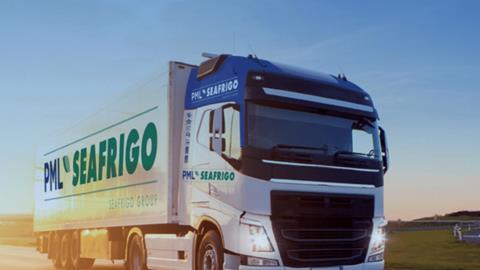

Prime Minister Keir Starmer’s “unilateral” decision, following the UK/EU Summit last week, to change post-Brexit customs rules “makes a mockery” of the “huge amount of time and effort” by hauliers and their clients to comply with Brexit border regulations over the past nine years, Mike Parr, CEO UK & Ireland, PML Seafrigo, said this week.
Parr’s criticism follows the government’s announcement to streamline border procedures, which were hammered out at the EU/UK Summit last week, as part of a wider move to reset the UK’s relationship with the EU.
One major change is to the Common Sanitary and Phytosanitary Area, which the government says will simplify and speed up food import and export processes between the UK and EU.
The move aims to reduce costs and delays for cross-border goods movements by removing certain checks on food and drink exports, including in both directions between Great Britain and Northern Ireland, eliminating certificates and controls in this area that have hampered trade flows and freight movements.
PML Seafrigo is at the forefront of these planned changes as it imports and exports fresh produce to over 25 countries and has invested heaviliy in meeting the post-Brexit border regulations.
Parr is furious that the company now faces further expense, slamming the planned customs changes as a “U-turn” which ignores the enormous and costly effort made by his company and many others to meet Brexit protocols since 2016.
He said: “During this period, businesses in the supply chain associated with the fresh produce industry have put a huge amount of time, effort – not to mention significant financial investment - to establish appropriate protocols within the new Brexit trading landscape.
“Producers, logistics suppliers, industry stakeholders and government representatives attended countless meetings to work towards a solution which would allow a fair and seamless transfer of produce into and out of the UK.
“To say this has been a difficult road to travel is an understatement. The challenging number of U-turns, the persistent failure to listen to those working within the sector, the inability to meet deadlines, the constant whitewashing to suit each government’s agenda, I could go on.
“Many companies – including PML Seafrigo – have worked tirelessly to try and remain ahead of the curve and to be “Brexit fit”. In our case, we went as far as investing in a transport and logistics hub with remote HMRC / Defra approved Border Control Post status to enable a faster transit of consignments out of the Port of Dover.
“The site incorporated specialist inspection amenities for Defra personnel. We addressed the need for best-in-class facilities for drivers to match the fundamental services available to them in other European countries. We were at the front of the queue to apply for training to acquire Authorised Operator Status.”
He also criticised the lack of consultation with stakeholders, which left the supply chain not only unprepared for the changes but assured by government representatives that there would be no change to boder checks, following the EU/UK Summit.
He explained: “Just two weeks ago, discussions were held regarding the much-anticipated plant health border checks, due to commence 1 July.
“Baroness Hayman insisted there was to be no easement on the deadline and that the new required checks would be rolled out – this despite the issues the industry has repeatedly flagged concerning Sevington’s inability to cope with the required level of inspections.
“We also voiced our concerns regarding the absence of a definitive list of produce classified as Medium Risk, the lack of clarity regarding the Common User Charge and the unacceptably long evaluation of the pilot Authorised Operator scheme.
“And now the Prime Minister has acted unilaterally to reset the rules. Without consulting the nation. Whatever your political persuasion, the fact remains that Brexit was the choice of the UK population, this maverick behaviour is inconsistent with the notion that Britain is a democracy.”
Parr is also critical of the lack of hard information on when these changes will happen, which he said has left the supply chain with many questions.
“We are now faced with the biggest U-turn of them all. And true to form, without any firm guidance to those affected most. There are no specific timings on when the new SPS protocol will start which will cause further bedlam at the border.
“In the absence of clear guidance, do we default to the original BTOM plans due to come into effect on 1 July or are we able to kickstart the Authorised Operator Status scheme? Is the government planning to rollout official inspections throughout a 24/7 window?
He also accused the government of betraying non-EU suppliers by ignoring the impact of inspection checks for non-EU fresh produce, which accounts for 50% of fresh produce imports.
Parr said: “These are countries that have stood by the UK during what can only be described as highly turbulent times. We’ve forged excellent working relationships with non-EU suppliers to maintain the year-round supply of produce.
“How can it be fair to now penalise those that have helped us, simply because the government has failed miserably in its attempt to deliver on a cohesive border strategy?”
Parr also questions whether hauliers and suppliers will be recompensed for the cost of changing their businesses to accomodate the post-Brexit border controls.
“Has the government given any thought as to how businesses might be reimbursed for all the time and money spent on working towards the original Brexit plan?
“The consumer will be oblivious to all the preparations made by those in the supply chain following the EU exit, to ensure compliance with the government’s instructions.
“They may be about to find out with the chaos that is about to ensue,” he warned.