



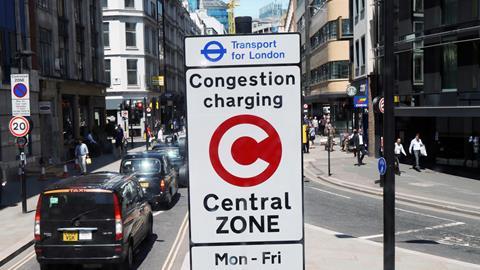

Plans to start charging electric trucks and vans that enter London’s congestion charging zone will penalise operators that have invested in significantly cleaner fleet vehicles, according to Logistics UK.
The group said hauliers will be unable to absorb the extra costs of paying the charge and end users will ultimately be forced to pick up the tab.
Transport for London launched a consultation this week which outlines proposals to bring to an end the current 100% discount for electric vehicles and introduce a 50% reduction from 2 January 2026 instead.
TfL said that if it did nothing, there would be an extra 2,200 vehicles on the capital’s roads on an average weekday, undermining its current scheme.
It wants to introduce the new discounts in two phases, with the 50% discount starting next year, reducing to 25% from 2030.
Logistics UK said TfL’s plans recognised the importance of commercial vehicles to the economy by creating a distinction between business fleets and domestic road users, but they still represented a significant increase for operators of greener vehicles:
“It is vital TfL incentivise operators to decarbonise fleets and we continue to press for the continued exemption from the charge for electric vans and HGVs,” said Chris Yarsley, Logistics UK senior policy manager.
“Any increase in charges is a disincentive for operators to serve the capital and congestion charges should be used to encourage road users to use alternative modes of transport – an option that is not available to logistics operators.
“Operators have made significant investments moving to electric vehicles and they simply cannot afford to soak up additional costs so it is likely that any increase in charges will have to be passed on which will ultimately lead to increased prices for the end user.
“London depends on logistics businesses to keep the capital stocked with everything its businesses and consumers rely on every day, and the transition to alternatively fuelled vehicles should be incentivised, not penalised in this way,” he added.
The consultation runs until 4 August and can be accessed here.