




F1 is chasing net zero by 2030, but logistics partner DHL says operational reality is shaping the journey. At Silverstone, MT heard why battery-electric trucks are not yet the answer for one of the world’s most demanding logistics operations
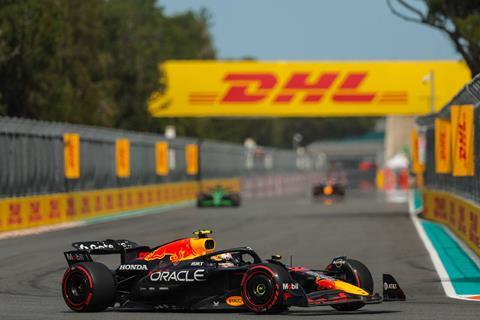
F1 is often described as the pinnacle of motorsport technology. But on a sweltering July day at this year’s Silverstone Grand Prix, the conversation inside DHL’s trackside trailer was less about horsepower and more about logistics.
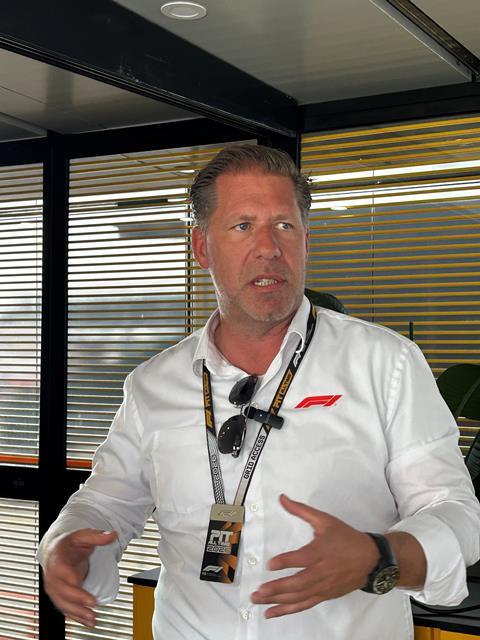
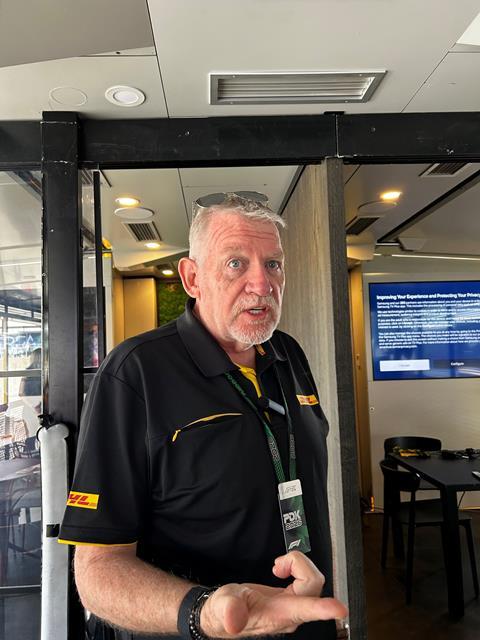
Gathered on the upper deck, journalists heard from the people responsible for moving the championship around the world. Leading the discussion were Christian Polhammer, F1 operations manager (pictured right), and Simon Price, DHL motorsport event logistics manager (below left).
The conversation centred on something far less glamorous than the racing itself but arguably just as important: the freight movements, customs procedures, alternative fuels and contingency planning that keep F1 on the road.
“The biggest challenge for electric is purely charging,” says Price. “Under the perfect circumstances, you can do 600 kilometres. But you don’t have the perfect circumstances. Coming from Austria, for example, or going to Canada, you could be waiting eight hours to recharge. We just don’t have that time.”
That explanation will sound familiar to many commercial fleet operators. Electrification is advancing quickly, but the right solution depends entirely on the job the vehicle needs to perform. For DHL’s F1 operation, the job is particularly unforgiving.
“There are commercial deadlines, and there are motorsport deadlines,” says Price. “Motorsport deadlines are not moveable. In normal logistics, if you can’t deliver on a Friday, we’ll deliver it on Monday,” he says. “It’s annoying, it’s upsetting, but you have that option. We don’t have that option.”
That single observation perhaps explains DHL’s approach to decarbonisation better than any sustainability strategy. Rather than pursuing electrification for its own sake, the company is adopting technologies that can reduce emissions without compromising reliability.
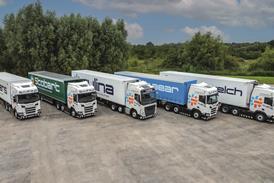
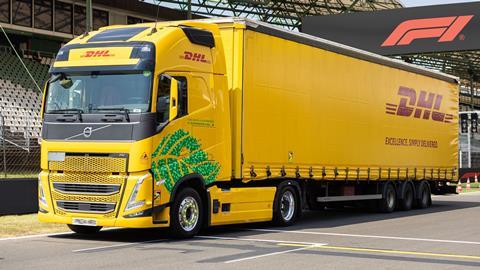
Across the European season, around 400 trucks move the championship between circuits, with DHL responsible for approximately 124 of those vehicles.
“All of our vehicles that we use in Europe are running on HVO,” says Price.
For many operators, HVO is becoming the bridge between conventional diesel and full electrification. It offers immediate carbon savings without fundamentally changing the way fleets operate. It also illustrates a wider truth that extends far beyond motorsport. The fastest route to lower emissions is not always the most obvious one. Sometimes it means extracting more environmental benefit from existing vehicles while battery-electric trucks, charging infrastructure and vehicle range continue to mature.
“When we started this journey, the technology for electric trucking wasn’t there,” says Price. “But technology has moved on in leaps and bounds. We are looking at electrifying our structures, but we need to make sure that when we deliver it, we deliver it right.”
There is an interesting parallel with the sport itself. F1’s new generation of cars are not fully electric either. Instead, they combine advanced sustainable fuel with a much greater reliance on hybrid technology, reflecting the same philosophy DHL is taking with its truck fleet: embrace electrification where it works, use lower-carbon fuels such as HVO where they deliver immediate benefits, and never compromise the ability to deliver the job.
For now, that means HVO doing much of the heavy lifting alongside sustainable aviation fuel, while battery-electric trucks are already being evaluated for widescale future deployment. The direction of travel is clear, but DHL insists the technology has to meet the operational demands of F1 before it can replace today’s fleet.
Travelling factory
The scale of the operation becomes clearer once you look beyond the trucks. An F1 weekend may appear to revolve around three days of practice, qualifying and racing, but the logistics operation begins weeks before the first car turns a wheel.
“The first group normally arrive about 11 days before the race,” says Polhammer. “The set-up starts around minus 14.”
By the time the lights go out on Sunday afternoon, the logistics team is already thinking about the next destination. As soon as the race finishes, the entire process goes into reverse. Garages are dismantled, hospitality units packed away, broadcast equipment disconnected and hundreds of tonnes of freight prepared for the next leg of a journey that circles the globe for much of the year.
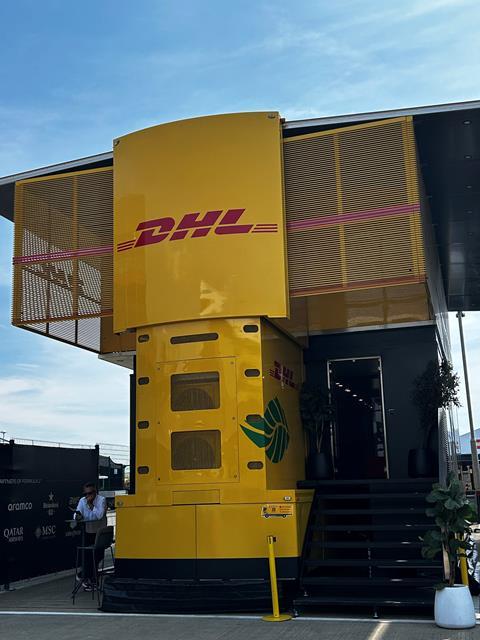
What emerged during the discussion was that F1 logistics is no longer simply about moving freight. Every Grand Prix requires a temporary city to be built, powered, connected, supplied, broadcast to the world and dismantled again a matter of days later.
Road haulage, air cargo, sea freight, customs compliance, temporary power generation, regional warehousing and contingency planning all have to mesh seamlessly. For the teams, that means maintaining multiple sets of equipment simultaneously.
“In Europe, there is a majority of one set,” Polhammer explains. “Some teams have two garage sets.”
Away from Europe, the complexity increases significantly.
“We have one main set of air freight that travels predominantly on the aircraft from race to race,” he says. “Each team will have six sea freight sets. They are always somewhere in the world, in transit between races.”
The system has become even more sophisticated as sustainability targets have tightened. Rather than shipping the same equipment backwards and forwards unnecessarily, F1 is increasingly regionalising its freight.
“In the USA, we would have kit that goes out from Miami,” says Polhammer. “It will stay in Miami all the way through until we pick it up for Las Vegas.”
Crisis mode
For all the planning, no global supply chain is immune from disruption. The real measure of a logistics operation is not what happens when everything goes according to plan, but how quickly it responds when it doesn’t.
One of DHL’s greatest tests came when shipping delays threatened to disrupt the Australian Grand Prix. The solution highlighted why F1 logistics bears little resemblance to conventional freight operations.
“The power of the network is what made it possible,” says Price. “We had to pull the sea freight off in Singapore. We had to decant it from the containers, because air freight packaging is completely different to sea freight packaging.”
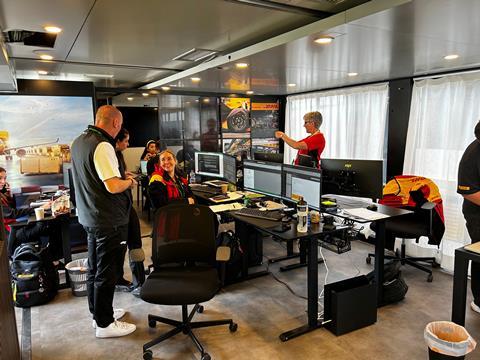
The cargo was unpacked, repacked for air transport and loaded onto aircraft bound for Melbourne. It was exactly the sort of intervention every logistics manager hopes never becomes necessary, but one that demonstrated the value of having aircraft, freight capability and operational decision-making under the same roof.
“It was a massive logistical process,” says Price. “But it was one of our proudest moments because we achieved something there that I don’t think there was another logistics company in the world that could have achieved.”
The story neatly illustrates why F1 continues to rely on a long-term logistics partner rather than simply buying transport capacity. When every hour counts, success depends as much on relationships, experience and access to a global network as it does on the trucks, aircraft and ships themselves.
“The partnership we’ve built over more than 20 years is critical,” says Price. “It’s not just about moving freight. It’s about knowing each other’s requirements and being able to solve problems together.”
Sustainable paddock
The sustainability challenge does not stop at road transport. DHL and F1 are also tackling emissions from air freight, sea freight and the temporary infrastructure required to stage each race.
DHL is also moving towards more efficient aircraft, including Boeing 777 freighters, while sustainable aviation fuel is increasingly being introduced across the championship’s logistics operation..
On the ground, F1 has also transformed how it powers the paddock.
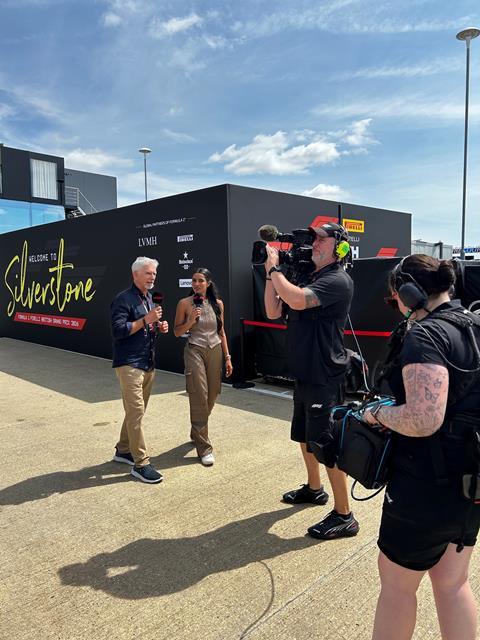
Across the European calendar, team garages, hospitality units and the wider paddock are now supplied by a combination of large solar arrays, battery energy storage systems and HVO-powered generators, dramatically reducing reliance on conventional diesel generation.
Polhammer explains that the challenge is not developing the technology, but deploying it consistently around the world.
The battery packs used in Europe are roughly the size of a 20ft shipping container, and transporting them internationally presents challenges of its own. Charging infrastructure, local power supplies and available equipment also vary widely between regions.
For now, that means Europe is leading the way, while other parts of the calendar adopt lower-carbon solutions where local infrastructure allows.
There is unlikely to be a single technology that delivers net zero. Instead, progress will come from hundreds of incremental improvements: HVO on the road, sustainable aviation fuel in the air, smarter freight planning, regionalised equipment, more efficient aircraft and, eventually, battery-electric trucks when the technology can meet the operational demands.
“As soon as the technology can meet our expectations, and we’re confident that we can still deliver the product we need to deliver, we’ll go for it,” says Price.
Human judgment
Artificial intelligence also featured in the discussion, although perhaps one of the biggest surprises was how little it currently influences day-to-day logistics. Both men acknowledged that AI is beginning to help streamline certain processes and improve planning, but neither suggested it is replacing experience or judgement any time soon.
Every circuit presents its own logistical puzzle. Silverstone brings its sheer scale and compressed turnaround times. Monaco tests operators with its cramped streets and restricted access. New venues such as Madrid require years of planning before the first truck even arrives.Technology can help, but knowing where the bottlenecks are likely to emerge, and having the relationships to solve them, still counts for more than any algorithm.
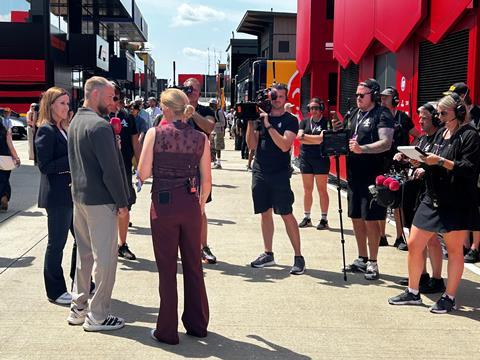
As we left the trailer and headed into the paddock, the conversation about freight schedules, customs paperwork and alternative fuels quickly gave way to the theatre of F1. Fans strained over the barriers in the hope of spotting a driver. Television crews hurried between interviews. At one point, British driver Lando Norris burst from a team building pursued by autograph hunters, somehow finding time to sign as he ran towards the pit lane.
It was a reminder of how the paddock blurs the lines between the people who make the show happen and those who simply come to watch it. The same could be said of the logistics operation itself. Few will give much thought to the hundreds of trucks, dedicated cargo aircraft, sea freight containers and logistics specialists that ensured every garage, every television camera, every hospitality suite and every component arrived exactly where it needed to be.
That is probably the greatest compliment DHL and F1’s logistics team could receive. If they’ve done their jobs properly, nobody even notices them. Yet for transport operators facing many of the same questions around decarbonisation, resilience and investment, there was a useful lesson hidden away inside that trailer at Silverstone. Even in one of the world’s most technologically advanced sporting championships, success is not about adopting every new solution first. It is about choosing the right one for the job.