






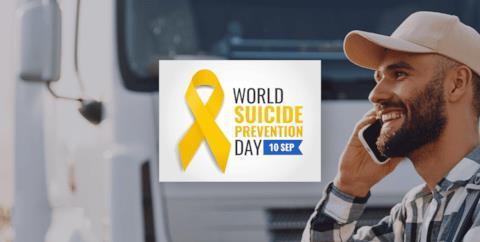

The haulage industry must do more to address driver mental health and suicide risk, with male HGV drivers historically recording a suicide risk around 20% higher than the national average, according to transport technology company SNAP.
On World Suicide Prevention Day tomorrow (10 September), SNAP is calling on operators to make driver wellbeing part of the industry’s everyday safety culture, arguing that a simple conversation about how someone is feeling could help identify those who are struggling.
Previous analysis by the Office for National Statistics (ONS) found that male large goods vehicle drivers had a suicide risk around 20% higher than the national average for men, rising to around 25% higher among male van drivers.
The figures relate to deaths registered in England between 2011 and 2015 and should not be interpreted as current suicide rates.
However, the Transport Research Laboratory (TRL) highlighted the historically elevated risk among road freight drivers in 2026, pointing to pressures including long and irregular working hours, fatigue, social isolation, time pressure, job insecurity and poor roadside facilities.
For drivers spending long periods alone and away from family and friends, these pressures can be particularly difficult.
SNAP said professional drivers can continue working and making deliveries while struggling with their mental health, without colleagues, managers or family necessarily being aware.
The company is therefore encouraging operators to adopt a “Check the Load. Check the Vehicle. Check the Driver” approach, making wellbeing conversations as routine as vehicle and load checks.
SNAP said improving driver wellbeing should be a shared responsibility across the transport industry, including fleet operators, employers, truck parking operators and roadside facilities.
It highlighted the importance of access to suitable rest facilities and safe parking, alongside workplace cultures where drivers feel able to speak openly about mental health without fear of being viewed as weak.
The company also urged employers to ensure managers understand potential signs that someone may be struggling and that drivers know where confidential professional support is available.
Matthew Bellamy, MD of SNAP, said: “This is a subject that matters to me personally, as well as professionally. I’ve experienced the impact suicide can have on a family, and I know how difficult it can be to recognise that someone is struggling or to know what to say.
“That’s why I believe so strongly that we need to make conversations about mental health and wellbeing more normal, not only when someone reaches crisis point, but as part of everyday life and everyday safety.
“The transport industry has a particular responsibility because of the unique pressures people can face on the road.
“We can’t solve this issue alone, but we can create environments where people feel seen, supported and able to speak up. Sometimes asking a simple ‘Are you OK?’ can be the start of something incredibly important.”
Bellamy said the industry could not solve the issue alone, but could help create environments where drivers “feel seen, supported and able to speak up”.
For anyone struggling or concerned about someone else, Samaritans can be contacted free on 116 123, 24 hours a day. In an immediate emergency, call 999 or attend A&E.