




Operators said the cost of cutting their emissions is now their biggest obstacle and had overtaken infrastructure as their number one headache – because customers won’t pay more for decarbonisation.
The international road transport union (IRU) blamed expensive solutions and unwilling customers for creating a cost wall, and with the high price of decarbonisation haulage operators had no reliable way to pass it on.
Almost two-thirds (64%) of European firms said the transition was just too expensive.
The IRU said the lack of charging and refuelling infrastructure was the leading obstacle last year, but this had now been outstripped by vehicle prices.
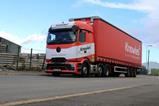
It pointed out that an electric truck cost two to three times as much as its diesel equivalent, which was far more than an operator’s thin margins could absorb.
IRU secretary general Habib Turki said: “Regulation can set the direction, but it cannot deliver the transition on its own.
“We need solutions that work in the real world such as affordable vehicles, accessible energy and infrastructure, and financial incentives that reflect the realities of running a transport business.
“Decarbonisation will move faster when it makes commercial sense for operators of all sizes.”
The IRU’s findings came as the chartered institute of logistics and transport (CILT) called on the Chancellor to introduce measures that controlled costs and helped accelerate investment in cleaner transport.
It said alongside immediate challenges such as sky-high diesel prices, the government must focus on creating conditions for businesses to invest in alternatives.
“The government should increase support for the electrification of freight transport, across both road and rail, and address the barriers that make the transition more difficult,” said Daniel Parker-Klein, CILT policy director.
“This includes supporting short-sea ferries and ensuring ports have the affordable electricity and reliable grid connections needed to provide shore power to vessels at berth.
“The autumn Budget is an opportunity to provide practical support for cleaner transport while recognising the essential role logistics play in the UK economy.”