

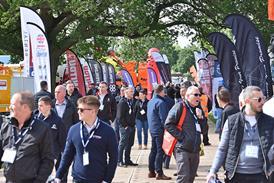


European electric truck makers risk being undercut on price and pace by Chinese rivals unless they accelerate development and cut costs, according to new Voltempo chief executive Simon Smith (pictured).
Smith warned that while European OEMs remain strong on brand and engineering reputation, they are increasingly vulnerable as Chinese manufacturers bring lower-priced, purpose-built electric trucks into the UK and European market.
“What the Chinese have been very good at in the electrification space is building very good products that do the job — and they do it cheaper,” Smith said. “That’s already happened in the car industry, and unless the established manufacturers get their act together quickly, the same thing will happen in trucks.”
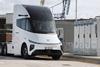
Chinese manufacturers are no longer a theoretical threat. Brands such as Yutong, the world’s largest bus builder, have already entered the UK electric truck market, with its 7.5-tonne battery-electric rigid now on sale through UK distributor Pelican Engineering. Other Chinese-owned brands, including Maxus, are also active in the light- and medium-duty electric truck segments, targeting urban and regional fleets.
At the lighter end of the market, pricing is already sharply competitive. Industry sources suggest Chinese-built 7.5-tonne electric trucks are being offered in the £60,000-£70,000 range before grants, with multiple battery options and body configurations. With the Plug-in Truck Grant applied, net prices fall further, bringing electric vehicles within reach of fleets that would previously have dismissed them on cost alone.
By contrast, electric trucks from established European manufacturers — particularly in the heavier weight classes — can still command prices approaching £300,000 or more, broadly in line with Smith’s view that costs are “coming down, but still high”.
“That gap is closing, but slowly,” Smith said. “Whether you like it or not, Chinese trucks are cheaper, and that’s the danger.”
Smith argued that demand for electric trucks is still being constrained by customer behaviour, with transport buyers continuing to prioritise price over carbon performance.
“If you really want to move towards net zero, you’ve got to put pressure on the customer that’s purchasing the service,” he said. “They create the demand. At the moment, they still choose by price, so you need incentives that push behaviour in the right direction.”
While vehicle list prices attract attention, Smith said the biggest barrier for fleets remains leasing economics, particularly residual values.
“Most people buying trucks are leasing them,” he said. “The residual value risk on electric trucks is the big issue for leasing companies. To mitigate that risk, they charge higher monthly fees, which makes electric options look unattractive.”
Instead of direct purchase subsidies, Smith believes governments should focus on residual value guarantees, which would lower monthly lease costs and reduce risk for funders.
“That could really help,” he said. “It’s better than just giving cash away. If it works, the government gets the money back — and if it doesn’t, at least it’s targeted.”
Smith also warned against relying solely on regulatory targets to drive uptake, arguing that poorly designed mandates risk distorting behaviour.
“If electric trucks are genuinely better, more productive and lower cost, no one is going to game the system,” he said. “Targets on their own don’t shift the dial; you need something stronger behind them.”
Looking ahead five years, Smith said Chinese manufacturers are well positioned because they have designed electric vehicles from the ground up, rather than adapting diesel platforms.
“Traditional manufacturers are trying to modify trucks that were built for ICE,” he said. “That makes them heavier, more expensive and not built for purpose.”
Chinese firms benefit from vertical integration, often producing batteries in-house and operating within supply chains optimised for electrification. Smith said this allows them to price vehicles more aggressively — a model European OEMs struggle to match while continuing to support large diesel portfolios.
“If the price differential becomes too big, fleets will choose the cheaper option,” he said.
Smith added that infrastructure providers such as Voltempo have a role in reducing operational costs and supporting fleet transition, and suggested that electric trucks could also act as a gateway to wider adoption of autonomous technology over the next decade.
“I can really see autonomous vehicles coming to the road,” he said. “This space is ripe for it.”