








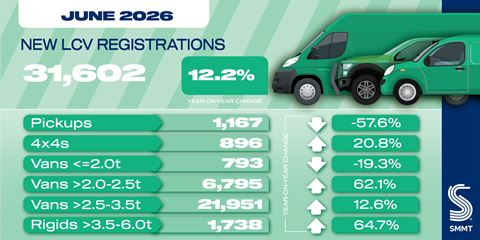
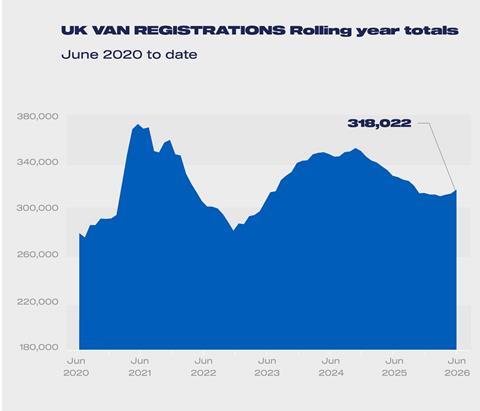
UK new light commercial vehicle (LCV) registrations rose 12.2% in June to 31,602 units, while battery electric vehicle (BEV) registrations jumped by almost a quarter, acccording to the latest figures published today by the Society of Motor Manufacturers and Traders (SMMT).
The third consecutive month of growth lifted first half registrations by 1.7% to 158,648 units, reversing the decline recorded during the same period last year.
SMMT attributed the June uplift largely to demand for larger vans. Registrations of vans weighing between 2.5 and 3.5 tonnes increased 12.6% to 21,951 units in the month, while medium-sized vans rose 62.1% to 6,795 units. 4×4 registrations grew by 20.8%, but vans weighing less than 2.0 tonnes declined by 19.3%.
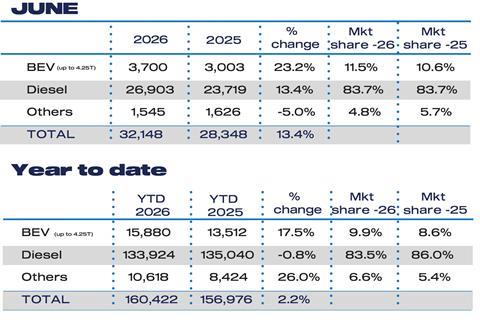
BEV registrations, meanwhile, rose for a third month, up 23.2% to take an 11.5% market share. The strong monthly performance contributed to a positive first half of the year for electric vans, with market share increasing from 8.6% to 9.9%.
Demand, however, remains well below the 24% share mandated this year – a target that would require uptake to average some 40% market share, four times its current level, over the next six months. Such growth under current conditions is implausible, SMMT said.
While substantial manufacturer investment means the majority of van models are now available with a plug, SMMT said significant barriers remain, including higher upfront costs, charging infrastructure concerns and operating cost pressures, which, it added, influence purchasing decisions.
Mike Hawes, SMMT chief executive, commented: “The market’s return to growth is encouraging, but it comes against a backdrop of lower volumes and significant market disruption over the past 18 months.”
He added: “While businesses continue to invest in new vans, zero emission uptake remains well below ambition, holding back the fleet renewal needed to deliver net zero.
Hawes concluded: “A successful transition requires regulation, infrastructure and incentives to work together, giving operators the confidence to invest.
“With the gap between targets and demand continuing to widen, urgent reform of the mandate is needed to keep the transition on track.”