





Ransomware attacks on transport fleets are escalating, exposing weaknesses in outdated IT systems. Trimble chief executive Rob Painter and technical lead Jonah McIntire tell Motor Transport that moving to AI-powered, cloud-based platforms isn’t just vital for cybersecurity - it’s also key to boosting efficiency, automating routine tasks, reducing emissions and future-proofing haulage operations
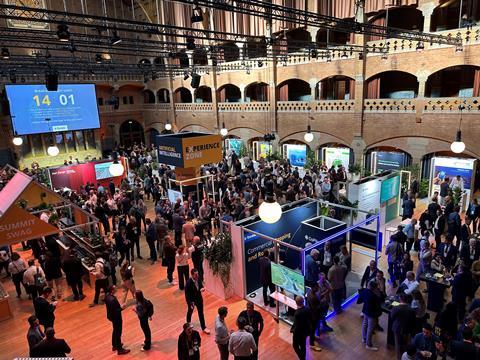
At last week’s Transporeon Summit in Amsterdam, a common thread ran through the panels, keynotes and breakout conversations: AI has stopped being an abstract idea. It’s here. And it’s rewriting the rules of transport and logistics, whether you’re ready for it or not.
Among those leading the charge is Trimble, a tech giant with roots in GPS and telematics, now repositioned at the forefront of automation, visibility and logistics software. Trimble powers the software while Transporeon, its freight platform, links up carriers and shippers across Europe to cut empty miles and boost efficiency.
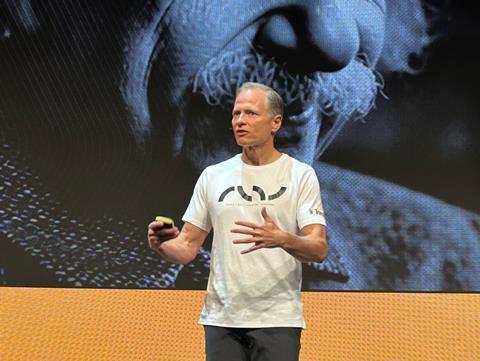
Speaking to Motor Transport during the event, chief executive Rob Painter made it clear that he sees Trimble’s role as equal parts innovator and enabler, particularly when it comes to unlocking AI for the logistics sector.
But in a world of buzzwords and hype, Painter is wary of magic-bullet thinking. His message to fleet operators is clear: it’s not just about embracing shiny tools; it’s about making sure your systems, people, and infrastructure are ready. And nowhere is that more urgent than in cybersecurity.
Despite high-profile and damaging cyberattacks against the likes of Owens Group, KNP, Yusen and even tech specialists Microlise, logistics firms may not think of themselves as prime targets. But they are. Ransomware groups, state-backed hackers, and criminal syndicates increasingly see hauliers as soft entry points into critical supply chains. And as Painter warns, too many operators - particularly SMEs running small to mid-sized fleets - are not equipped for the scale or sophistication of today’s threats.
“We spend tens of millions a year on cyber resilience,” he says. “I won’t say we’re cyber proof - that’s probably an arrogant statement - but we aim to be cyber-resilient, and also cyber-humble.”
That humility comes from experience. Trimble has seen enough in its years of global operations to know how fragile even robust systems can be when exposed to modern attacks.
“The more that you have on-premises environments - those old on-site servers - the more vulnerable you are,” Painter says. “They tend to be easier to hack than when you’re operating in the cloud.”
In the wake of the Jaguar Land Rover attack, he insists it’s a conversation more operators should be having, particularly those still wary of migrating their operations off hard drives and dusty back-room servers.
But if Painter had a group of UK hauliers in the room right now, wouldn’t they just say that new tech is a big investment in tough times, and ask whether they really need it?
His answer is unequivocal. “Yes, you do. Because without cloud infrastructure, you’re not only more vulnerable to cybercrime; you’re also locking yourself out of a future where AI, automation, and real-time data exchange are the norm. We see that markets change and markets evolve. Those who can adapt and change will thrive. Those who cannot, won’t.”
He’s not scaremongering, he insists. He’s seen this cycle before. “Look at navigation,” he says. “At one time, GPS was a luxury. Now, it’s taken for granted. Route planning, tracking, emissions reporting, predictive maintenance. All of it depends on systems that are scalable, secure, and cloud-based.
“Change is the only constant,” he adds. “The rate of change has never been this fast - and it will never be this slow again.”
AI and automation
Painter is optimistic about AI, but not in the futuristic, Silicon Valley sense. His focus is firmly on practical business outcomes - specifically, profit and loss. It’s a perspective that resonates with clients like Tesco and Nestlé, who are more interested in tangible results. After all, the key question for most operators is: ‘What’s in it for me?’’
“Look at your top cost drivers: fuel, wages, depreciation, insurance,” Painter responds. “Now ask: can AI help with any of those? The answer is yes - and in most cases, significantly.”
For instance, Trimble’s tools can optimise routes not just for speed, but for fuel efficiency. They can help identify driver behaviour that increases wear and tear. They can even support dispatchers by automating repetitive tasks - like pricing, quoting, or rebooking after delays.
“If you can save just a few minutes a day across your fleet, or a bit of fuel on every journey, that difference compounds,” he says. “You’re talking about serious savings - sometimes in the millions - over the course of a year.”
For a sector that runs on tight margins, it’s a compelling proposition.
Painter’s approach to AI is both pragmatic and philosophical. When asked whether Transporeon’s technology might be too costly, or too complex, for traditional SMEs, he turns the question on its head.
“What’s your legacy? Think about ten years from now. Where’s the world going to be? Where are your customers going to be? Where are your competitors going to be? Step into that future.”
He’s under no illusions about the cultural resistance to change. Many operators - particularly family-owned SMEs - are rightly cautious about cost and disruption. But Painter’s point is that the future doesn’t wait.
“AI isn’t a gamble anymore,” he says. “It’s not theoretical. We’re not talking about what might be possible in ten years. We’re talking about what’s being deployed today, with measurable results.”
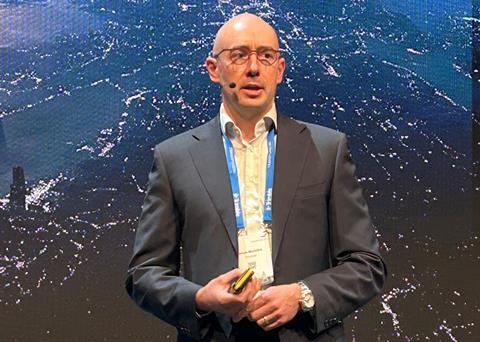
And that’s where Jonah McIntire, Trimble’s chief product and technology officer for transportation & logistics, comes in. While Painter focuses on vision and strategy, McIntire is the boots-on-the-ground technologist - an “early adopter” who’s been building AI tools for years and knows how to spot the difference between hype and hard return on investment.
So what’s his perspective in terms of practical AI applications in haulier operations, and how can this tech help operators tackle themes like automation and decarbonisation?
Where Painter lays the strategic groundwork, McIntire now takes over to dive into the technical trenches. And you rapidly sense he can blend cutting-edge AI innovation with practical logistics know-how.
“My role is to take AI and machine learning out of the lab and into the real world,” he says. “There’s a lot of buzz, but the key is showing hauliers and carriers how these tools actually work - and deliver value - day in, day out.”
Last year, MT spoke with Ulrike Just, vice president at global logistics solutions provider Linde, who cautioned UK logistics companies against rushing into complex warehouse automation projects that could end up crippling their businesses.
“Sometimes firms want to appear forward-thinking, but going all in comes with massive cost implications,” Just told us. “Customers often want to automate the hardest tasks - rather than the ones that offer a quick return on investment.”
McIntire agrees, stressing that not every AI project needs to be groundbreaking to be valuable. You can start small with AI and still see real results. Often, it’s the smaller, repeatable tasks that unlock the most immediate savings.
“If you can automate it, you should,” he smiles. “Things like carrier onboarding, quoting, scheduling - these are huge time savers. Automate those and you free your people up to do higher-value work.”
Trimble’s AI-driven carrier onboarding tools scan and verify documents, assess carrier reliability, and speed up compliance checks, dramatically reducing paperwork delays.
“It’s about reducing friction,” McIntire explains. “That friction adds cost, slows down operations, and makes customers unhappy.”
AI pricing engines also come into focus. By analysing historical loads, market rates, and customer priorities, the system can generate optimised quotes within seconds - a task that would take hours manually.
“That speed can make or break a deal,” McIntire says. “It also means carriers can respond quickly, locking in contracts faster and reducing dead miles.”
Predictive analytics and decarbonisation
One of the biggest game-changers, according to McIntire, is AI’s ability to anticipate problems before they happen.
“The old way was reactive; you wait for a breakdown or a delay, then scramble to fix it,” he explains. “Now, AI is helping you predict those issues and proactively reroute, reschedule, or repair.”
Trimble’s predictive maintenance algorithms monitor vehicle telematics in real time, flagging signs of wear or failure long before they become costly breakdowns. This reduces downtime and extends asset life.
“It’s like having a mechanic who never sleeps,” McIntire says. “And it’s not just trucks - it’s trailers, refrigeration units, even driver fatigue.”
On the customer side, real-time visibility tools powered by AI help predict arrival times, spot delays, and proactively communicate with shippers and receivers, reducing ‘where’s my load?’ calls.
McIntire echoes Painter’s view that cloud infrastructure is non-negotiable: “All the AI in the world won’t help if your data is siloed, outdated, or insecure,” he says bluntly.
Trimble’s platform is cloud-native, he explains, which means data flows seamlessly from vehicle to office to customer. AI models update continuously with fresh data, and security and compliance are managed centrally. Scalability is inherent, allowing fleets from small to enterprise scale to benefit.
“It’s like moving from a village water well to a city-wide pipeline,” is how McIntire puts it. “You just can’t serve the whole community otherwise.”
The pressure on hauliers to reduce carbon emissions is intensifying and AI is increasingly part of that response.
“Fuel is the biggest operational cost and carbon emitter, so optimising routes and driving behaviour is a natural fit,” McIntire says.
Trimble’s telematics tools use AI to suggest more fuel-efficient routes and identify risky driving patterns - harsh braking, excessive idling - that increase emissions.
“We’re also working on integrating electric vehicle (EV) readiness into the platform,” he says. “AI can help plan charging schedules, optimise battery usage, and predict range.”
The aim is to provide hauliers with actionable insights that support their environmental goals without sacrificing efficiency or profitability.
Another common fear with AI is that it will trigger redundancies. But both Painter and McIntire emphasise that AI is not about replacing drivers or dispatchers but augmenting them.
“We’re automating the routine, so your people can focus on the complex,” McIntire says. “No AI system will replace the judgement, experience, and relationships that make great hauliers great.”
The challenge, he adds, is managing change: “Technology adoption isn’t just about software. It’s about culture, training, and communication. We work closely with our customers on that.”
As our conversation closes, both leaders reflect on where Trimble sees the sector heading: “AI, automation, and cloud tech aren’t fads. They’re the infrastructure of tomorrow’s logistics,” Painter says. “And the companies that embrace them -thoughtfully, securely, and strategically - will thrive.”
McIntire agrees, adding: “The future is about connected ecosystems. Trucks, warehouses, shippers, customers - all talking in real time, powered by AI insights. It’s a massive opportunity for efficiency, sustainability, and growth.”
For hauliers, that future is arriving fast. The choice is clear: adapt and harness the power of AI and cloud, or risk falling behind.