





Lengthy delays of up to 15 years for grid connections are blocking operators’ EV investments and will continue to do so even after fossil fuel vehicle sales end, unless the government takes urgent action, the Society of Motor Manufacturers and Traders (SMMT) is warning.
Transitioning the entire national fleet of around 5.1 million vans and 626,000 trucks is crucial to net zero and would deliver CO2 savings greater than the total carbon footprint of Sweden, but this ambition faces an uphill climb when operators are currently facing wait times of up 15 years for grid connections, the society said this week.
SMMT is warning that this gridlock is the biggest barrier to EV adoption, making it impossible for the sector to meet the 2035 deadline for when the sale of new, non-ZEV vans and HGVs under 26 tonnes is due to end – and the 2040 deadline, when all new HGVs sold in the UK must be zero emission.
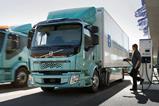
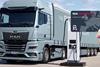
Whilst fleet operators can now choose from 35 zero emission van models – more than half of the market – and more than 30 ZEV truck models, uptake remains significantly behind ambition, with the ZEV mandate requiring 16% of new van sales to be ZEVs in 2025, SMMT points out.
Currently, electric van registrations are running at little more than half of that (8.3%) with around 167,000 more expected to reach the road over the next three years – which would see the market reach 25% ZEV by the end of 2027, below the mandate target of 34%.
The challenge is even steeper for the HGV sector, SMMT warns, with ZEVs making up just 0.5% of registrations and accounting for fewer than 600 trucks currently in use.
While grants for plug-in vans and trucks and government’s Zero Emission HGV and Infrastructure Demonstrator (ZEHID) programme continue to incentivise the zero emission commercial vehicle transition, SMMT is calling for immediate government action to remove the administrative gridlock to investment.
It added: “Government recently announced that it will fast-track grid connections for data centres, wind farms and solar power installations.
“This preferential treatment, as well as consistent and efficient implementation of local planning policy, must also be afforded transport depots, if the UK’s net zero and air quality improvement ambitions are to be realised.
“Together with more affordable energy and a faster rollout of infrastructure across the strategic road network, this would make the case for operator investment in ZEVs unarguable.
“To do otherwise risks ceasing the mass transition of the HGV sector before it has even begun, while holding back uptake of electric vans given they would use these same facilities.”
Mike Hawes, SMMT chief executive, commented: “We cannot deliver net zero and improve air quality without decarbonising commercial vehicles. But if operators have to wait up to 15 years just to be able to plug them into their depots, there is no case for investment.
“Prioritising grid connections, alongside reform to planning and action on energy costs, would reduce barriers to adoption, ensuring commercial vehicles continue to carry the loads that keep our economy on the move whilst doing the heavy lifting the nation needs to reach net zero.”