
Motor Transport Decarbonisation Power Players 2025
Congratulations to everyone who made it into this year’s Motor Transport Decarbonisation Power Players!
We had a huge amount of industry nominations this year, which reflects the passion and determination of the road transport sector in its journey towards a net zero future.
Take a look through the digital supplement to see who is leading the way when it comes to the road transport sector’s journey towards net zero.

1. Geoff Tomlinson MD FSEW
Geoff Tomlinson was named No 1 Power Player after a Damascene conversion led him to take his fleet diesel-free in the industry’s most challenging sector, without government funding.
Read a full interview with Geoff Tomlinson on the Green Heroes page.
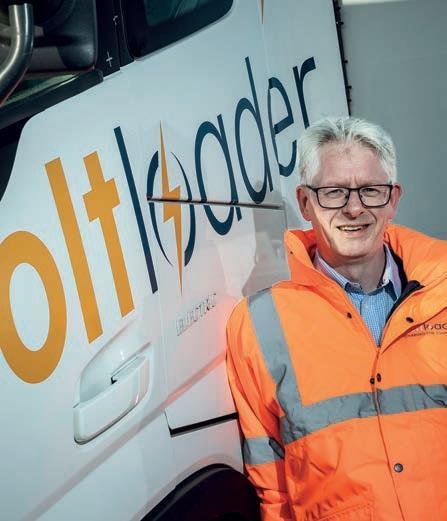
2. Dave Rose, Founder and CEO, Voltloader
Dave Rose launched Voltloader in 2023 to provide electric road haulage alongside a supporting charging network. A 100% electric fleet from the get-go, with no diesel trucks on the fleet, the business initially focused on the food and agricultural haulage sector and plans to expand across the wider industry as the operation grows. As well as installing its own ultra-rapid charging infrastructure at its East Anglian site, Voltloader has the capabilities to install charging infrastructure at customers’ sites, which it believes helps solve the ‘chicken and egg’ conundrum over the transition to EVs. It has also entered into shared infrastructure arrangements with other e-HGV operators, including Welch’s Transport, to enable the use of partner sites for charging. Voltloader works with a number of well-known retailers and brands. For example, a recent trial saw it transport temperature-controlled goods from farming supplier Strawsons to a Sainsbury’s regional DC using a Sunswap solar-powered electric refrigeration unit, which saved 19 tonnes of CO2 compared with diesel equivalents. Voltloader has also this year joined the Electric Freightway consortium, which forms part of the government-funded Zero-Emission HGV & Infrastructure Demonstrator (ZEHID) initiative.
The judges said: “Dave is doing it from the ground up and should be commended for that. Deciding to go fully electric from day one is brave and impressive.”
3. Ben Garner, Head of logistics development and standards, Tarmac
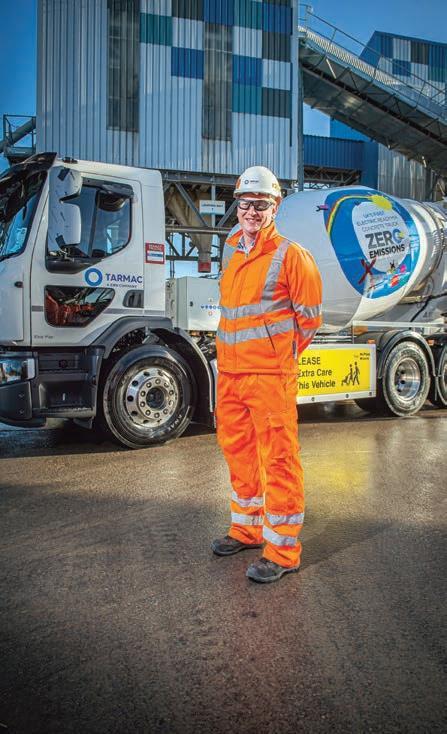
Ben Garner has been instrumental in driving the company’s decarbonisation efforts within the construction logistics sector. His leadership and innovative approach have positioned Tarmac at the forefront of sustainable logistics, making him a standout Motor Transport Decarbonisation Power Player. Garner has been a Power Player since 2023, this year bursting into the Top 5 trailblazers in the sector. Garner has spearheaded several key initiatives aimed at reducing carbon emissions. One of his notable achievements was the development and deployment of the UK’s first all-electric ready-mix concrete mixer, known as the e-mixer. This vehicle, created in partnership with Renault Trucks and TVS Interfleet, operates with zero-tailpipe emissions and is expected to save 42 tonnes of CO2 annually. The e-mixer not only demonstrates the viability of EVs in heavy-duty applications but also sets a new standard for the construction industry. Under Garner’s guidance, Tarmac has also implemented an EV discovery programme, allowing suppliers to trial EVs before committing to purchase. This initiative reduces the risk for suppliers and encourages the adoption of EVs across the supply chain, facilitating a smoother transition to sustainable transport solutions. Garner’s efforts extend beyond vehicle innovation. He is a vocal advocate for the integration of low-carbon logistics solutions, such as the use of hydrotreated vegetable oil (HVO) and other bio-diesels as transitional fuels. His strategic vision includes enhancing rail freight capabilities to further reduce the carbon footprint of construction logistics. By championing these initiatives, Garner has significantly contributed to Tarmac’s sustainability goals and the broader decarbonisation of the transport sector. His work exemplifies the qualities of a Motor Transport Decarbonisation Power Player, inspiring others to pursue innovative and impactful solutions for a greener future.
The judges said: “Decarbonising an organisation like Tarmac is a major challenge. Ben has demonstrated his bravery in consistently pushing the organisation forward and sharing his findings with the wider industry.”
4. Kate Broome, Sustainability and social impact director, Kuehne+Nagel
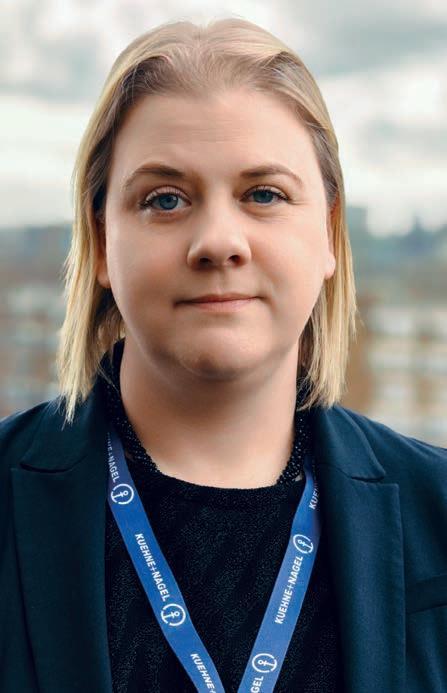
Kate Broome is leading the charge on heavy road freight electrification in the UK. As sustainability and social impact director for Kuehne+Nagel (K+N) UK she is driving change in an almost entirely fossil-fuelled and hard-to-abate sector. Broome knows that SME hauliers are a critical part of the road freight transport industry, referring to them as “our road carrier partners” and an “integral part of our service to our customers and a valued part of our supply chain”. One of Broome’s key achievements has been helping to secure significant UK government grant funding for zero-emission HGVs and infrastructure as part of the £200m ZEHID programme. Critically, Broome has ensured that this grant funding is accessible to SME hauliers too. She speaks passionately about including SME hauliers in the electrification transition at conferences, and through her work with government and industry associations, advocating for policy and funding changes in support of SMEs to ensure the resilience of the UK’s freight sector. She says: “We’re already working alongside our partners to understand and address the barriers to decarbonising our sector, such as how we finance the deployment of new zero-tailpipe emission vehicles and speed up grid connectivity to deploy charging infrastructure. “If we don’t consider SMEs within this work, the transition could be very bumpy for small operators.” It is also Broome’s mission to use her platform to inspire excitement about the sector’s electric transition, to counter the tired doom-and-gloom narrative that often takes over.
The judges said: “Kate is an outstanding role model, personally driving significant progress in road decarbonisation.”
5. Carlos Rodrigues, MD, Renault Trucks UK and Ireland
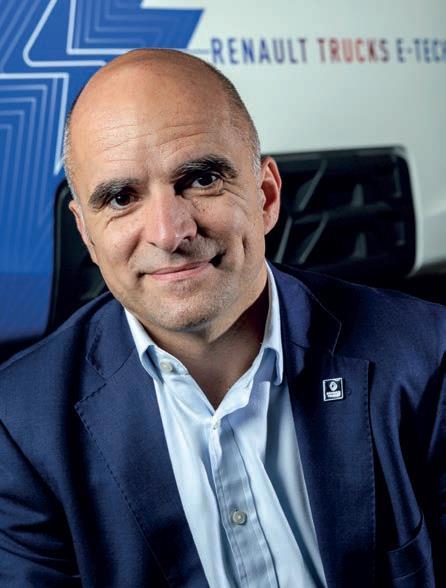
A Top 5 position once again for Carlos Rodrigues in the Power Players listings, underlining the fact that he is a pivotal figure in advancing the decarbonisation agenda in the commercial vehicle sector. His leadership, strategic vision and resilience in driving the organisation forward have set him apart as a leader among the OEMs serving the sector. Rodrigues has championed the transition to zero-emission vehicles, emphasising the importance of battery electric trucks. Under his guidance, Renault Trucks has significantly invested in EV technology, making it a market leader in sustainable transport solutions. The company has introduced a full line of electric trucks in the UK, catering to various applications from light to heavy-duty, demonstrating the feasibility and profitability of these vehicles. One of Rodrigues’ notable achievements is the commitment to attain carbon neutrality for Renault Trucks by 2040. This ambitious goal includes reducing CO2 emissions by 15% by 2025 and 30% by 2030 compared with 2019 levels. The judges of this year’s Power Players felt Rodrigues was a standard bearer for the truck manufacturers and dealers, setting the tone for engagement with the policy makers and operators.
The judges said: “Carlos has been instrumental in driving the industry forward, ensuring that Renault Trucks not only meets regulatory requirements but also sets a benchmark for the industry.”
6. Chris Welch, MD, Welch’s Transport
Chris Welch has been championing the decarbonisation agenda for the SME sector, ensuring Cambridge-based Welch’s Transport is positioned at the forefront of new technology and sustainability initiatives. The business launched Cambridge’s first 42-tonne, 100% electric HGV as part of its involvement in the eFREIGHT 2030 consortium and is one of only a handful of SMEs to be involved in the government’s ZEHID initiative. Welch’s also created an urban consolidation centre, which aims to make last-mile deliveries in the city of Cambridge emission-free and cut vehicle trips by 46%. In addition, the company has rolled out Optimize routing technology to further reduce emissions and worked alongside FirstBus at its Leicester depot, which has developed shared EV charging infrastructure for buses and HGVs.

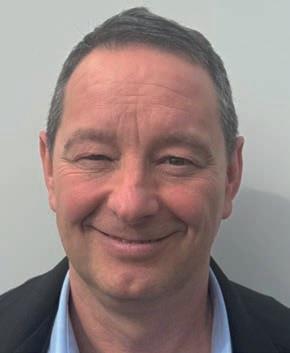
7. Aaron Powell, Fleet and logistics director, Speedy Hire
Aaron Powell has worked across a number of sectors in transport and fleet management for more than 40 years. At Speedy Hire, he has pioneered the use of new transport technology and created the hire sector’s largest electric and hybrid fleet, including the use of HVO on its HGV delivery fleet. The business has also introduced a carbon-reporting tool for customers. With more than 200 service centres and 1,000-plus vehicles, Speedy’s reach is significant. Winner of the 2023 MT Low Carbon Award and 2024 Innovation Award, Powell also heads up Speedy’s Innovation Centre, which drives the company’s commitment to sustainability, safety, and technological advancement. It features solar panels, living walls, beehives made from repurposed hard hats and climate-controlled lighting and heating systems.
8. Michael Boxwell, Group CEO, Voltempo Group
Michael Boxwell has worked in technology development for more than 30 years, specialising in EV, charging systems and renewable energy products for the past 20. As group CEO of Voltempo, developers of the British-designed and manufactured e-HGV megawatt HyperCharging system, Boxwell is accelerating the uptake of e-HGVs and delivering the next generation of EV chargers. He works closely with government agencies and significant stakeholders to fast-track EV innovation, infrastructure, and technology. He has been pivotal in Voltempo leading the eFREIGHT 2030 consortium, one of the ZEHID programmes.

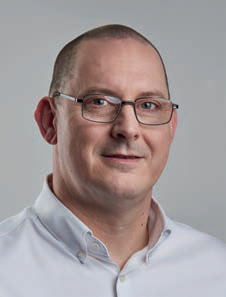
9. Dr Nicholas Head, Head of sustainability, XPO Logistics
Since joining XPO Logistics in 2022, Head has led the 3PL’s sustainability strategy and is the driving force for the organisation to de-carbonise its fleet of 1,700 trucks by 2035. XPO has three certified carbon-neutral sites in the UK – Crick, Milton Keynes and Leicester. Head is leading XPO’s involvement in the ZEHID Electric Freightway demonstrator project and will be putting 20 EVs on the road this year. He has specialised in the environmental sector over the past 13 years, including achieving an MSc and PhD from the University of Northampton, focusing on circular economy and assessing the viability of business models structured around sustainability. Head has a reputation for being knowledgeable and passionate about sustainability as well as being approachable and supportive with XPO customers and operational teams alike.
10. Mathias Krieger, Co-founder and chief product officer, HIVED
Mathias Krieger is leading the transformation of urban logistics through the development of a fully electric, end-to-end parcel delivery network. Under his guidance, HIVED has integrated a 100% electric fleet, including the addition of 11 Mercedes-Benz eActros trucks – nine eActros 600 and two eActros 400 models – into its operations. These vehicles will serve the company’s middle-mile network, transporting goods from retailer warehouses to local hubs for final delivery. To support this electric fleet, HIVED plans to install megawatt-capable charging infrastructure at hubs in west London, the Midlands, and Manchester. HIVED’s operations are powered entirely by renewable energy, and the company collaborates with major retailers such as ASOS, Nespresso, and Uniqlo to offer tailpipe emission-free delivery services.

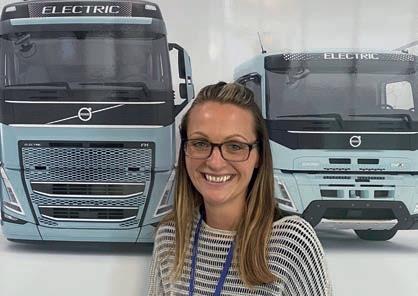
11. Amy Stokes, Head of e-Mobility, Volvo Trucks UK and Ireland
Amy Stokes has proven herself to be a leading figure in the decarbonisation of commercial vehicles. With a strong background in energy and EV markets, Stokes has been pivotal in advancing Volvo Trucks’ sustainability initiatives. She joined Volvo Trucks after serving as group energy market manager at Volkswagen Group UK, where she developed new energy market opportunities to support EV uptake. At Volvo Trucks, Stokes has overseen the introduction of the all-electric Volvo FH, FM, and FMX HGVs, which are designed to meet the increasing demand for zero-emission transport solutions. Her efforts focus on reducing CO2 emissions and promoting the adoption of EVs across the UK.
12. David Landy, Head of fleet, technical, EVRi
Since joining EVRi more than four years ago, David Landy has played a pivotal role in reducing carbon emissions of the company’s delivery network. Landy is at the forefront of transitioning and testing alternative-fuel vehicles and has recently taken delivery of the company’s first DAF XB 19-tonne EV, which is based on the south coast. EVRi has also embraced bio-CNG HGVs and will have 270 electric vans on the fleet this year, including more than 100 eSprinters. The business has also been expanding its e-cargo bike fleet, as part of a £19m investment in sustainability, boosting the tally from 33 to 99 this year, with an aim to reach 3,000 in 10 years. In the 2023/24 financial year, Evri achieved a 21% carbon reduction per parcel.
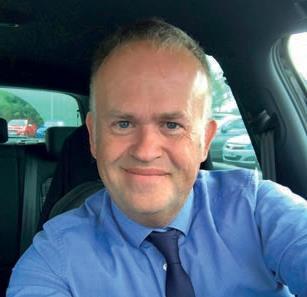
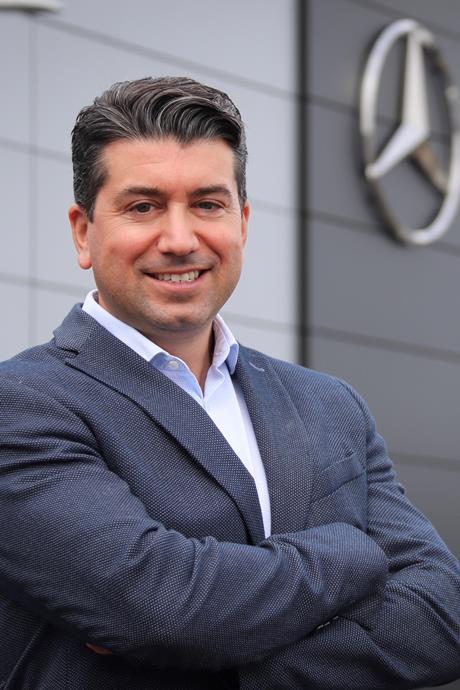
13. James Venables, Head of future sustainability, Daimler Truck UK
James Venables is a key figure in the company’s decarbonisation efforts. With more than two decades of experience in the industry, Venables has demonstrated strong proficiency in e-mobility and sustainability. He previously served as the e-consultancy manager, where he was responsible for the comprehensive electrification plan and management of the e-Truck portfolio, including the eActros and eEconic. In his current role, Venables leads the eTeam and collaborates with fleet customers, infrastructure providers, and colleagues at Daimler Truck to reduce the carbon footprint of trucking in the UK. His efforts include promoting the use of zero-emission HGVs and overseeing the implementation of advanced electric truck models, such as the eActros LongHaul and eAtego.
14. Justin Laney, Fleet manager, John Lewis Partnership
John Lewis Partnership (JLP) won the Motor Transport Low Carbon Award for the third time in the past seven years in 2024 and Justin Laney was ranked top of the inaugural Power Players in 2022. Laney is walking the walk as well as talking the talk and has a clear plan to take the partnership to net-zero transport emissions. All JLP HGVs will run on biomethane by 2028, the partnership will stop using fossil fuels by 2030, all vans and light trucks will be electric, all trailer fridges will be powered electrically and any remaining niches, for example the combine harvester on JLP’s farmland, will run on HVO. JLP is also taking part in Project Jolt to demonstrate the commercial viability of 42-tonne battery electric tractors.
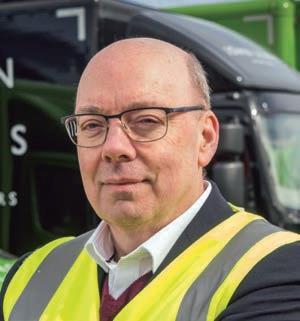
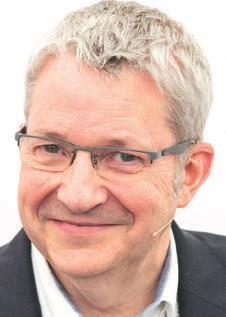
15. Andrew Scott, Product director, TVS Interfleet
Andrew Scott has been a Power Player since 2023 and remains a prominent figure in the decarbonisation of the road freight sector in the UK. With a background in electric mobility and product development from his tenure at Renault Trucks, Scott brings a wealth of expertise to TVS Interfleet. He has been instrumental in developing the UK’s first electric concrete mixer in collaboration with Renault Trucks and McPhee Mixers. This innovative vehicle operates with zero tailpipe emissions, setting a new standard for sustainable construction logistics. Scott’s role at TVS Interfleet involves overseeing product plans for various TVS group companies, including McPhee Mixers, Wilcox Tippers, Priden Engineering, SB Components, and Purpose Bodies. His leadership extends to the eFREIGHT 2030 consortium, where he contributes to the deployment of electric HGVs and the establishment of new charging locations.
16. Josh Spencer, EV sales manager, Ford & Slater
Josh Spencer is a new entry to the Power Players and is widely considered one of the rising stars in the commercial vehicle and road freight sector, bringing fresh energy and perspective to the sector. He is a key advocate for the decarbonisation of the road freight sector in the UK and is playing a leading role in DAF’s involvement with the ZEHID programme. With extensive experience in the EV industry, Spencer has been instrumental in promoting the adoption of electric trucks. Spencer’s work involves not only selling EVs but also supporting customers through the transition process. This includes helping them understand the benefits of EVs, navigating the complexities of charging infrastructure, and ensuring they achieve significant carbon savings. His efforts have led to substantial operational efficiencies and reduced emissions for operators.

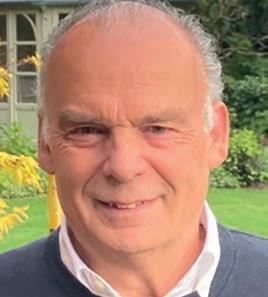
17. Hugh Frost, Founder and chairman, Hubl Logistics
Hugh Frost is pioneering sustainable solutions in cold chain logistics to decarbonise refrigerated transport. His flagship innovation, the CoolRun pod, is a modular, passive cooling unit that eliminates the need for fuel-powered refrigeration, reducing emissions and costs in last-mile delivery. These pods are undergoing trials with UK wholesalers. Under Frost’s leadership, Hubl Logistics has secured more than £2.5m in funding from Innovate UK, the Freight Innovation Fund, and private investors. This support is accelerating the development and deployment of CoolRun pods, enabling Hubl to scale its impact both domestically and internationally .
18. Jamie Sands, Head of solutions, Welch’s Transport
Jamie Sands has been instrumental in advancing the decarbonisation of HGVs within both his company and the broader logistics industry. He has supported Welch’s Transport to became one of the first UK hauliers to deploy a 19-tonne electric HGV and installed a publicly accessible 150kW rapid charger at its Duxford depot, promoting shared-use charging among operators. His expertise in data analytics and operational systems has been instrumental in optimising efficiency and reducing emissions across supply chain processes. Sands is shaping the future of sustainable logistics in his role and in initiatives such as Project Jolt, ENROUTE and eFreight2030.
19. Ross Taylor, Founder, Buffaload Logistics
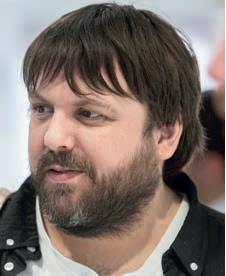
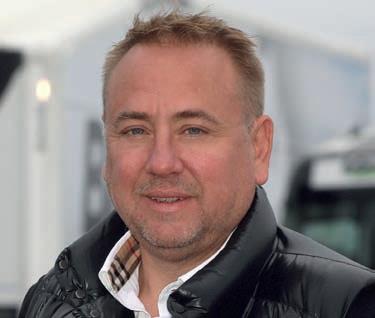
Ross Taylor’s leadership in reducing Buffaload’s CO2 emissions began by introducing double-deck trailers, which today deliver 60% more load than a traditional single-deck trailer. In 2020, the business brought in 43 LNG trucks. It has continued to expand its natural gas fleet, and with the addition of 20 new Volvo FH Aero bioLNG-powered trucks joining the line-up this year, it will have a tally of 85 units by the middle of 2025. Later this year, Taylor plans to invest in the infrastructure to bring Buffaload’s own biogas supply in-house, reducing fleet emissions by 98%. These efforts align with Buffaload’s Network to Neutral strategy, which includes optimising logistics to reduce empty running and offsetting remaining emissions.
20. Angus Webb, Founder and CEO, Dynamon
Angus Webb is a leading figure in the decarbonisation of the UK’s road freight sector and received a special mention by the Power Players judges for his role in rescuing the ZEN Freight project, part of the ZEHID programme. As CEO of Dynamon, he has developed leading data analytics software tools that enable fleet managers to optimise their operations for sustainability. Webb’s innovative approach involves the analysis of historical fleet data to simulate vehicle performance, identifying opportunities for decarbonising specific vehicles and routes. He is involved with two of the ZEHID projects: taking the lead on ZEN Freight, which focuses on the deployment of battery-electric and hydrogen fuel cell trucks, supported by a nationwide network of charging and refueling stations; while also involved in eFREIGHT 2030.

21. Matthew Deer, Group MD, Swain Group
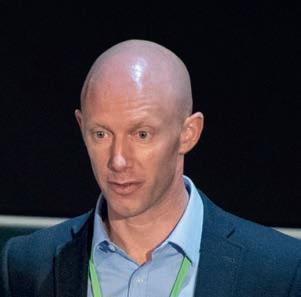
Matthew Deer is a prominent leader in the decarbonisation of the road freight sector in the UK, both as an operator and also an industry leader, having formed the eHGV LinkedIn networking group and playing a key role in Logistics UK’s sustainability activities. Under his leadership, Swain Group has made significant strides in sustainability, including the transition of its London Gateway fleet to hydrotreated vegetable oil (HVO) and the adoption of electric HGVs. These initiatives have substantially reduced the company’s carbon footprint and set a benchmark for the industry. Deer has also driven the integration of advanced technologies, such as real-time tracking systems and data analytics, to enhance operational efficiency and reduce emissions. His strategic vision includes expanding the use of low-emission vehicles and promoting sustainable logistics practices across the supply chain.
22. Olly Craughan, Head of sustainability, DPD UK
Former Number 1 Power Player in 2023, Olly Craughan is back in the Power Players rankings as he continues his work to decarbonise the DPD fleet. Since taking on this role in January 2020, Craughan has driven significant sustainability initiatives in the company. Under his leadership, DPD has expanded its fleet of electric vans and is now turning the company’s attention to the truck fleet, where he has overseen the adoption of HVO, reducing CO2 emissions by up to 90% compared with diesel. His innovative approach includes trials of electric and hydrogen fuel cell HGVs, further advancing DPD’s net zero ambitions.


23. Paul Campey, MD, Campeys of Selby
While the larger operators are often credited with leading the way in industry sustainability, Paul Campey is one of an expanding group of SMEs that are pushing the boundaries on innovation in the sector. Under his leadership, Campeys of Selby has taken pioneering steps towards sustainability, including the introduction of the UK’s first 19-tonne electric DAF LF truck in February 2023. This vehicle represents a significant milestone in the company’s commitment to reducing carbon emissions and promoting greener logistics. Campey has also overseen the integration of 12 CNG tractor units into the fleet since 2021, further demonstrating his dedication to sustainable transport solutions. His strategic vision includes the expanding to a new 20-acre site in Selby to accommodate logistical needs and foster future growth.
24. Graham Thomas, Fleet operations manager, Ocado Group
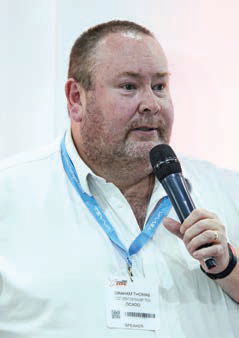
Graham Thomas has been a driving force behind the company’s commitment to decarbonising its HGV fleet. Under his leadership, Ocado has significantly reduced its carbon footprint by integrating alternative fuels into its operations. In 2019, the company became the first UK retailer to self-fund an on-site natural gas refuelling station at its Hatfield customer fulfilment centre, enabling the transition of 20% of its HGV fleet to CNG, powered by blended biomethane. This move resulted in a 29% annual reduction in CO2 emissions from the fleet. Furthering its sustainability efforts, Ocado has incorporated the Titan solar-powered refrigeration system into its double-deck trailers, eliminating the need for diesel-powered refrigeration and aligning with Ocado’s goal to achieve net-zero operations by 2035.
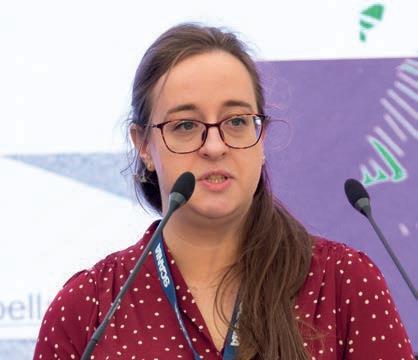
25. Isabella Panovic, Programme manager – zero-emission road freight, Innovate UK
Isabella Panovic is a programme manager at Innovate UK, facilitating the delivery of the government’s £200m ZEHID programme. The programme aims to increase HGV operator confidence and government understanding of zero-emission HGV technology and infrastructure. Before joining the land and maritime transport team at Innovate UK, Panovic worked in research and development policy for a number of years in the UKRI research councils to support development of other net-zero technologies, such as offshore renewables and decarbonising heating and cooling. She also completed a PhD at the University of St Andrews, focusing on biorefineries and the chemistry of biomass.